
Physical AI Translation Services for Autonomous Systems and Intelligent Machines
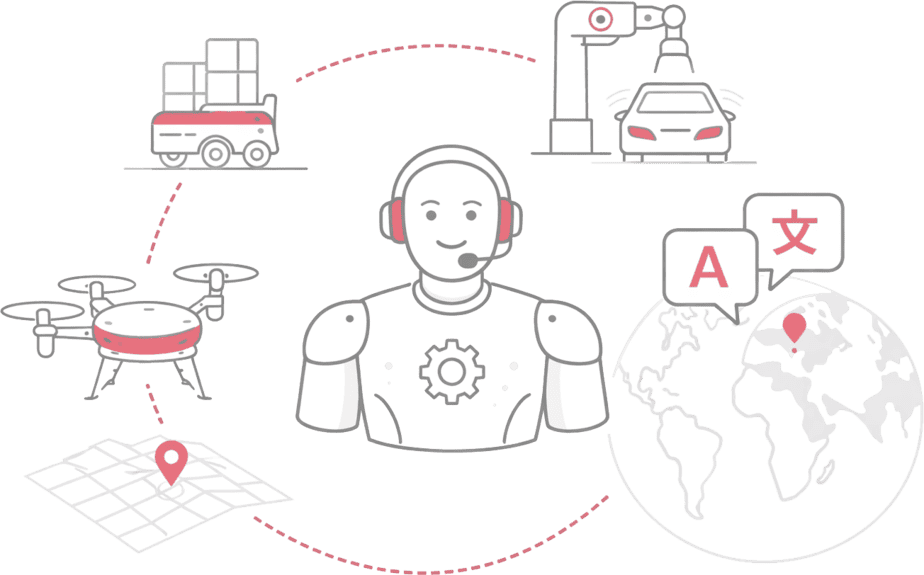
Supporting the global deployment of robotics, autonomous vehicles, smart drones, and industrial AI platforms across 100+ languages.
What Is Physical AI?
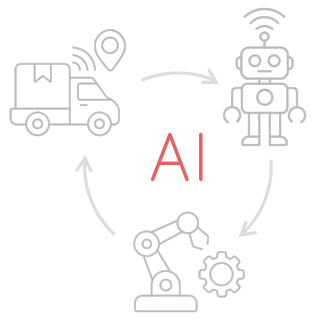
Physical AI refers to AI systems that perceive, interpret, and act within real-world physical environments. Unlike purely digital AI applications that operate in the cloud or within enterprise software platforms, physical AI systems are embedded in machines, vehicles, robots, and industrial equipment. These systems combine sensing, computation, and mechanical action to interact directly with the physical world.
Physical AI sits at the intersection of AI-powered hardware, embedded software, computer vision, sensor fusion, and advanced automation. Cameras, LiDAR, radar, and other sensors feed continuous environmental data into machine learning models running on edge AI devices. These models analyze conditions in real time, detect objects or anomalies, and trigger actions such as robotic movement, navigation adjustments, inspection decisions, or safety responses.
This convergence has led to the rapid growth of autonomous systems capable of operating independently or alongside humans. Intelligent robotics now manage warehouse fulfillment and collaborative manufacturing tasks. Self-driving vehicle platforms interpret road environments and respond dynamically. Industrial AI inspection systems detect production defects faster than human operators. Smart drones monitor infrastructure, survey terrain, and support logistics.
Humanoid robotics represents one of the most advanced forms of embodied AI. Designed to function in environments built for people, humanoid systems rely on sophisticated perception, balance, motion control, and human-machine interaction capabilities. These systems must interpret physical surroundings, respond to human input, and communicate clearly through multilingual interfaces, voice prompts, and on-screen guidance.
Many of these technologies fall under the broader category of embodied AI, where intelligence exists within a physical form and continuously interacts with its environment. Because these systems operate in dynamic and often safety-sensitive conditions, clarity of communication becomes critical.
Physical AI systems are now deployed across:
- Manufacturing and smart factories
- Logistics and warehouse automation
- Autonomous mobility and transportation
- Aerospace and unmanned aerial systems
- Public infrastructure and smart cities
- Service environments supported by humanoid robotics
Global investment in intelligent robotics, autonomous systems, and edge AI devices continues to accelerate. As AI-powered hardware expands into international markets, companies must localize embedded interfaces, safety documentation, compliance materials, operator training programs, and customer-facing content to support global deployment.
Physical AI is not just software intelligence. It is intelligence embodied in machines that move, sense, and act. When those machines operate across languages and regions, precise translation and localization become essential to safety, compliance, and user trust.
Physical AI Sectors We Support
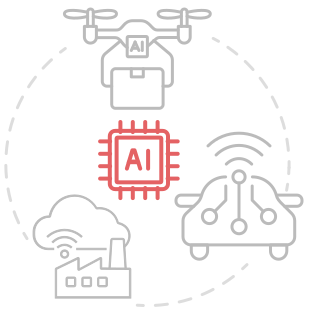
Stepes supports companies developing and deploying physical AI systems across high-growth industries where intelligent machines operate in real-world environments. These sectors combine AI-powered hardware, embedded software, computer vision, automation, and human-machine interaction. As physical AI technologies expand internationally, specialized translation and localization services are essential for safe deployment, regulatory compliance, and global market adoption.
Autonomous mobile robots and collaborative robots are transforming warehouse automation systems, logistics networks, and manufacturing facilities. These intelligent robotics platforms rely on embedded software, real-time navigation, and human-machine interaction systems to operate efficiently alongside workers.
We provide robotics localization and robot software translation for:
- Warehouse automation dashboards
- Logistics and fulfillment robotics platforms
- Collaborative assembly robots
- Fleet coordination systems
- Multilingual operator interfaces and touchscreen controls
- Real-time alerts and diagnostic messaging
Because cobots operate in close proximity to human workers, cobot safety manual translation is critical. Safety instructions, emergency procedures, maintenance documentation, and compliance materials must be precise, consistent, and aligned with regional standards. Accurate robotics localization ensures smooth operations across multilingual production environments.
Self-driving and autonomous vehicle systems represent one of the most complex applications of physical AI. These platforms integrate sensor fusion, AI-driven perception models, and embedded control software to interpret and respond to road environments in real time.
Stepes provides autonomous vehicle translation and automotive software localization services for:
- In-vehicle interface localization
- Digital dashboards and infotainment systems
- Fleet management software translation
- Advanced Driver-Assistance Systems documentation
- Multilingual warning and alert systems
- Regulatory and certification documentation
ADAS documentation translation requires technical precision across braking systems, collision avoidance, lane-keeping assistance, and driver monitoring technologies. As autonomous mobility platforms expand globally, accurate localization of safety-critical content and compliance documentation supports regulatory approval and user trust.
Humanoid robotics and service robots represent a rapidly evolving category of embodied AI designed to function in environments built for people. These public-facing robots operate in retail, healthcare, hospitality, airports, and service settings where clear communication is essential.
Our humanoid robot localization services include:
- AI voice interface translation for multilingual speech output
- Conversational AI dialogue and intent library localization
- Multilingual onboarding and user guidance flows
- Touchscreen and visual interface localization
- Customer interaction scripts and service prompts
- Global product launch materials
Because service robots engage directly with customers and the public, AI voice interface translation must consider tone, cultural context, clarity, and user experience. Consistent localization across voice systems, on-screen messaging, and training documentation supports successful international deployment.
Industrial AI inspection systems and smart manufacturing platforms use computer vision and machine learning models to detect defects, monitor production lines, and optimize factory performance. These AI-powered defect detection systems often operate on edge AI devices in high-speed industrial environments.
Stepes provides industrial AI translation and manufacturing software localization for:
- Vision-based quality control platforms
- Factory automation dashboards
- Real-time inspection alerts and analytics displays
- Maintenance and calibration documentation
- Compliance and audit-ready materials
- Technical specifications and engineering documentation
Manufacturing software localization requires strict terminology consistency across hardware components, AI models, and quality control processes. Accurate translation supports operational continuity and regulatory compliance in global smart factory deployments.
Smart drones and autonomous aerial systems rely on AI-powered hardware, navigation algorithms, and embedded flight control software to perform monitoring, surveying, logistics, and infrastructure inspection tasks.
We provide UAV software localization and drone manual translation services for:
- UAV control systems and ground station interfaces
- Real-time flight dashboards and telemetry displays
- Flight operation manuals and safety checklists
- Maintenance and inspection documentation
- Regulatory compliance documentation
- Remote pilot training materials
Real-time interface localization is especially important in aerial systems where operators must respond instantly to alerts regarding airspace restrictions, battery levels, weather conditions, and emergency procedures. Accurate drone manual translation ensures safe and compliant international deployment across diverse aviation regulatory frameworks.
What We Translate for Physical AI Companies
Physical AI companies operate at the intersection of hardware, embedded software, automation, and regulatory oversight. Successful global deployment requires consistent, technically accurate translation across user interfaces, safety documentation, compliance materials, and market-facing communications. Stepes provides specialized translation and localization services tailored to AI-powered hardware and autonomous systems operating in real-world environments.
Physical AI systems depend on embedded software to control sensors, actuators, navigation systems, and decision engines. These interfaces often operate within limited screen space and require concise, precise messaging.
We support localization of:
- Control panels and machine interfaces
- Operator dashboards and analytics displays
- Real-time alerts and diagnostic notifications
- Command prompts and status indicators
- Short-string UI localization for compact displays
- Version-controlled firmware updates and release notes
Embedded system localization must account for space constraints, character limitations, and rendering behavior across different devices. Terminology consistency is critical when translating alerts, commands, and system messages that directly affect machine operation and safety. Our workflows align software strings with documentation, ensuring clarity across firmware updates and multilingual deployments.
When AI-powered machines operate in physical environments, safety communication becomes mission-critical. Clear translation of safety documentation reduces operational risk and supports regulatory compliance across regions.
We translate:
- User manuals and operator guides
- Installation and setup instructions
- Safety warnings and hazard notices
- Risk mitigation documentation and safety assessments
- Maintenance procedures and emergency protocols
- Regulatory filings related to product safety
Safety-critical translation requires strict terminology control and alignment with engineering specifications. Even minor inconsistencies in warning language or procedural instructions can lead to liability exposure or compliance challenges. Stepes applies structured review processes tailored to physical AI and autonomous systems.
Physical AI systems must comply with regional and international standards before entering global markets. Accurate translation of compliance documentation supports regulatory approval and market access.
We provide translation for:
- CE documentation and technical files
- ISO documentation and certification materials
- Regional conformity documentation
- Product testing reports and validation records
- Technical files required for global market entry
Compliance translation demands precision and familiarity with industry standards. Structured terminology management ensures that regulatory terminology remains consistent across submissions, audits, and cross-border filings.
Physical AI platforms require trained operators, technicians, and service teams to deploy and maintain systems safely and efficiently. Multilingual training content supports global workforce readiness.
Our services include translation and localization of:
- Technician certification programs
- Maintenance training modules
- Simulation-based training content
- Multilingual field service documentation
- Digital learning platforms and eLearning modules
- Troubleshooting and diagnostic training materials
Training localization must preserve technical accuracy while maintaining instructional clarity. We ensure that procedural language, safety references, and system terminology remain aligned with firmware interfaces and documentation.
As physical AI companies expand internationally, consistent messaging across marketing and investor communications supports global growth and brand credibility.
We localize:
- Product brochures and technical datasheets
- Trade show materials and demonstration content
- Technical white papers and industry reports
- Website localization for global audiences
- Investor decks for international fundraising
Marketing translation for AI-powered hardware requires both technical precision and strategic clarity. Consistent terminology across engineering documentation and external communications strengthens credibility with customers, partners, and investors.
Why Physical AI Requires Specialized Translation
Physical AI systems do not operate in isolation. They move, sense, decide, and act in real-world environments where communication errors can have operational, financial, or safety consequences. Unlike general technical content, translation for AI-driven machinery requires a structured, risk-aware approach that addresses the unique demands of intelligent robotics, autonomous systems, and AI-powered hardware.
Physical AI platforms often function in safety-sensitive environments such as manufacturing floors, warehouses, public spaces, roadways, and critical infrastructure. Clear communication in user manuals, on-screen alerts, warning labels, and emergency procedures is essential.
Safety-critical translation must ensure that hazard warnings, operational instructions, and mitigation procedures are unambiguous and consistent across languages. Inaccurate or inconsistent messaging can increase liability exposure, operational risk, and compliance challenges. This is particularly important for autonomous systems, collaborative robots, and advanced driver-assistance technologies.
Physical AI companies frequently operate across multiple jurisdictions, each with its own regulatory standards, certification requirements, and documentation rules. Regulatory translation services must account for:
- Regional safety regulations
- Product certification requirements
- Conformity documentation
- Technical files for market entry
- Ongoing compliance reporting
Technical translation for robotics and autonomous systems requires familiarity with industry-specific standards and structured documentation frameworks. Consistency across regulatory filings and engineering documentation supports smoother approvals and international expansion.
Physical AI systems span multiple layers: hardware components, embedded software, control dashboards, training materials, and compliance documentation. Terminology must remain aligned across all these elements.
For example, a sensor described one way in a firmware interface must be referenced consistently in user manuals, maintenance guides, and regulatory filings. Embedded system localization therefore requires structured terminology management to prevent discrepancies that could confuse operators or auditors.
Embedded system localization presents unique technical challenges. Many physical AI interfaces operate on compact displays with strict character limits. Short UI string constraints require careful adaptation to preserve meaning without truncation.
Alerts, status indicators, and command prompts must remain clear and actionable within limited space. In high-speed environments such as robotics or autonomous vehicles, concise and accurate interface translation directly impacts usability and safety.
Modern physical AI platforms often communicate through multiple channels simultaneously. Interfaces may combine on-screen text, voice prompts, audible warnings, icons, and visual signals.
Localization must therefore address multimodal systems where AI voice interface translation aligns with visual alerts and written documentation. Consistent phrasing across voice outputs, screen prompts, and printed manuals supports intuitive human-machine interaction.
Physical AI technologies evolve quickly. Firmware updates, software patches, hardware revisions, and AI model enhancements are released frequently. Translation workflows must accommodate rapid product iteration and strict version control requirements.
Embedded system localization and documentation updates must remain synchronized to avoid mismatches between firmware interfaces and manuals. Structured content management and controlled release processes help maintain alignment across languages during frequent product updates.
Physical AI organizations involve engineering, product management, compliance, legal, training, and marketing teams. Translation must bridge these functions while maintaining technical precision.
Regulatory translation services, technical translation for robotics, and embedded system localization all require cross-functional coordination. Consistent terminology and messaging across engineering documentation, compliance materials, training content, and marketing communications strengthen brand credibility and reduce operational risk.
Physical AI systems demand more than general technical translation. They require safety-critical translation processes designed for intelligent machines operating in dynamic environments. By combining structured terminology governance, embedded system localization expertise, and regulatory translation services, Stepes helps physical AI companies deploy autonomous systems globally with clarity, compliance, and confidence.
Multilingual Support for Global Product Deployment
Physical AI companies rarely launch in a single market. Robotics platforms, autonomous vehicles, industrial AI systems, and smart drones are typically designed for global scalability from the outset. Multilingual support is therefore not an afterthought. It is a strategic component of international product deployment.
Stepes supports product launches in 100 languages, enabling physical AI manufacturers to introduce autonomous systems and AI-powered hardware across diverse regions. From embedded software interfaces and safety documentation to training programs and marketing materials, we ensure consistent localization across all components of a global rollout.
Launching in multiple languages requires more than translation. It demands alignment across firmware interfaces, compliance documentation, and customer-facing materials to present a unified and technically accurate product experience.
Each region presents unique regulatory, linguistic, and operational considerations.
- In Europe: CE documentation, multilingual safety labeling, and region-specific compliance materials are essential for market access.
- In Asia: Manufacturers often require localization into Chinese, Japanese, Korean, and Southeast Asian languages to support manufacturing partnerships, distribution networks, and customer adoption.
- In the Middle East: Arabic localization must account for right-to-left rendering and region-specific regulatory standards.
Our localization strategy supports regional market entry by aligning technical documentation, regulatory translation services, and user interfaces with country-specific requirements.
Physical AI systems evolve continuously. From prototype development and beta testing to commercial launch and post-market updates, localization must remain synchronized with product development cycles.
We provide localization support across the full product lifecycle, including:
- Pre-launch technical documentation
- Embedded system localization during firmware development
- Multilingual training materials for deployment teams
- Post-launch documentation updates
- Ongoing compliance and certification revisions
This lifecycle approach ensures that translation remains consistent as hardware, software, and AI models evolve.
Autonomous systems and intelligent robotics platforms release frequent firmware and software updates to improve performance, safety, and AI capabilities. Translation processes must keep pace with rapid iteration.
We support version-controlled firmware updates, embedded UI revisions, and release documentation across languages. Structured workflows ensure that localized content remains aligned with updated system functionality, reducing the risk of inconsistencies between software interfaces and supporting documentation.
Terminology consistency is critical for physical AI systems operating across global markets. A component name, safety instruction, or system command must remain consistent across hardware specifications, software interfaces, regulatory filings, and training content.
Stepes implements long-term terminology governance through:
- Centralized multilingual glossaries
- Controlled vocabulary management
- Cross-functional terminology alignment
- Continuous updates aligned with product evolution
By maintaining structured terminology management over time, physical AI companies can protect brand consistency, support regulatory clarity, and ensure operational reliability across multilingual deployments.
Global expansion for physical AI systems requires more than translation at launch. It requires sustained multilingual support aligned with regulatory strategy, product updates, and long-term brand integrity. Stepes provides the structured localization expertise necessary to support autonomous systems and AI-powered hardware across international markets.
Our Approach to Physical AI Localization
Physical AI systems combine hardware, embedded software, real-time analytics, and regulatory oversight. Localization for these technologies requires more than general technical translation. It demands structured processes designed for safety-sensitive, version-controlled, and globally deployed autonomous systems.
Stepes applies a disciplined localization framework tailored to intelligent robotics, autonomous vehicles, industrial AI platforms, and AI-powered hardware operating in real-world environments.
Consistency across hardware components, software interfaces, regulatory filings, and training documentation is essential in physical AI environments. A sensor label, system alert, or operational command must remain identical across embedded firmware, user manuals, and compliance documentation.
We implement structured terminology management through:
- Centralized multilingual glossaries
- Controlled vocabulary frameworks
- Alignment between engineering, compliance, and product teams
- Continuous terminology updates tied to product evolution
This structured approach reduces ambiguity, supports safety-critical translation requirements, and ensures consistent language across all documentation layers.
Embedded system localization often involves short UI strings, limited display space, and real-time operational messaging. Translating strings without context can lead to truncation, ambiguity, or usability issues.
Our in-context UI validation process includes:
- Reviewing localized strings within staging or simulated environments
- Verifying character length and rendering constraints
- Confirming alignment between on-screen prompts and supporting documentation
- Validating alerts and commands for clarity and actionability
For autonomous systems and robotics platforms, in-context validation ensures that translated interfaces function correctly within the physical device environment.
Physical AI systems frequently operate in safety-sensitive settings. Quality assurance must therefore prioritize high-risk content such as warnings, emergency procedures, compliance documentation, and real-time alerts.
Our risk-based quality assurance framework includes:
- Content risk classification prior to translation
- Enhanced review for safety-critical translation elements
- Cross-checking terminology against regulatory documentation
- Technical review by subject-matter linguists
This structured QA process helps mitigate liability exposure and supports regulatory translation services across jurisdictions.
Autonomous systems and AI-powered hardware evolve rapidly through firmware updates, software revisions, and regulatory updates. Localization workflows must remain synchronized with development cycles.
We support:
- Version-controlled translation memory management
- Parallel tracking of firmware and documentation updates
- Coordinated multilingual releases aligned with product launch timelines
- Ongoing localization support for iterative improvements
By aligning embedded system localization with structured release processes, we reduce inconsistencies between updated software interfaces and supporting documentation.
Physical AI companies operate in highly competitive and innovation-driven markets. Source materials often include proprietary algorithms, technical specifications, and confidential compliance documentation.
Stepes implements secure data handling protocols, including:
- Controlled access to project files
- Segregated client data environments
- Confidentiality agreements for linguists and reviewers
- Secure transfer and storage procedures
Protecting proprietary technical data is essential when localizing autonomous systems, robotics platforms, and AI-powered hardware destined for global markets.
Through structured terminology management, in-context validation, risk-based quality assurance, disciplined version control, and secure data practices, Stepes provides a specialized approach to physical AI localization. This process framework supports safe deployment, regulatory readiness, and long-term global scalability for intelligent machines operating in multilingual environments.

Related Industry Expertise
Physical AI systems rarely exist in isolation. They combine robotics, embedded software, automotive technologies, industrial automation, and multimodal communication interfaces. To support these complex ecosystems, Stepes brings cross-sector expertise that aligns technical precision with global market requirements.
Our experience across related industries strengthens our ability to deliver accurate, safety-focused, and scalable localization for autonomous systems and AI-powered hardware.
Our robotics and automation translation services support manufacturers of industrial robots, collaborative systems, warehouse automation platforms, and advanced control technologies. This experience in robotics localization and robot software translation directly informs our work with physical AI platforms that rely on real-time machine intelligence and human-machine collaboration.
Autonomous mobility and intelligent vehicle systems require deep knowledge of automotive software localization, compliance documentation, and safety-critical messaging. Our automotive translation services support manufacturers and mobility technology providers with multilingual dashboard interfaces, ADAS documentation translation, and regulatory materials required for global vehicle deployment.
Smart factories and AI-powered production systems depend on consistent terminology across factory automation dashboards, inspection platforms, and maintenance documentation. Our manufacturing translation services provide structured support for industrial AI translation, compliance documentation, and technical communication across global production facilities.
Embedded system localization is at the core of physical AI deployment. Our software localization services support control panels, operator dashboards, firmware interfaces, and real-time alert systems. By aligning localized UI content with supporting documentation, we help ensure seamless user experiences across intelligent robotics, autonomous systems, and edge AI devices.
Physical AI systems require extensive documentation to support installation, operation, maintenance, and compliance. Our technical manual translation services cover user guides, service manuals, safety procedures, and regulatory documentation for AI-powered hardware and autonomous platforms operating in global markets.
Modern physical AI systems often incorporate multimodal communication, including voice prompts, on-screen instructions, training videos, and interactive demonstrations. Our multimedia and voice localization services support AI voice interface translation, training content adaptation, and multilingual product demonstrations that enhance user understanding and brand consistency.
By integrating expertise across robotics, automotive, manufacturing, software, and multimedia localization, Stepes delivers comprehensive language support for companies building the next generation of physical AI systems. This interconnected experience strengthens our ability to support complex, safety-sensitive technologies operating across international markets and multilingual environments.
Frequently Asked Questions About Physical AI Translation
Physical AI translation refers to the localization of content associated with AI-powered hardware and autonomous systems operating in real-world environments. This includes embedded software interfaces, firmware messages, safety documentation, compliance materials, training content, and marketing communications. Unlike general software translation, physical AI translation focuses on safety-critical messaging, regulatory alignment, and the integration of hardware, software, and documentation across global markets.
Robotics translation and localization involve real-time operational interfaces, human-machine interaction systems, and safety-sensitive documentation. General technical translation may focus primarily on manuals or product descriptions. In contrast, robotics localization requires alignment across embedded software, operator dashboards, firmware alerts, maintenance guides, and regulatory materials. Consistency and clarity are critical because robotics systems often operate alongside humans in industrial or public environments.
We implement structured terminology management to maintain consistency across hardware specifications, embedded system interfaces, user manuals, and compliance documentation. High-risk content such as safety warnings, emergency procedures, and risk mitigation instructions undergo enhanced review within our safety-critical translation workflow. This approach reduces ambiguity and supports regulatory compliance across regions.
Yes. Embedded system localization is a core component of physical AI translation. We localize short UI strings, control panel messaging, real-time alerts, and diagnostic prompts within firmware and device interfaces. Our in-context validation process helps confirm that translated content renders correctly within character limits and aligns with supporting documentation.
In many jurisdictions, autonomous vehicle systems and related documentation may require certified or compliant translations for regulatory filings, safety case documentation, and certification processes. Requirements vary by country and regulatory authority. We provide regulatory translation services and support documentation aligned with regional compliance standards to facilitate global market entry.
Common target languages for robotics and AI systems include major European languages such as German, French, Spanish, and Italian; Asian languages such as Chinese, Japanese, and Korean; and Arabic for Middle Eastern markets. The specific language mix depends on manufacturing locations, distribution networks, and regulatory requirements. We support deployment in 100 languages to help physical AI companies scale globally.
Physical AI platforms often release firmware and software updates to improve functionality, safety, and AI performance. We support version-controlled localization workflows that track updates across languages. Translation memory management, terminology governance, and synchronized release processes help ensure that embedded interfaces and supporting documentation remain aligned during rapid product iteration cycles.
Launch Your Physical AI Systems Globally with Confidence
Ensure safety precision, regulatory alignment, and embedded software accuracy as you scale internationally. Stepes delivers specialized localization for autonomous systems and AI-powered hardware across 100 languages.