
100+
Languages
Phone + Video
Remote Interpreting Formats
On-Demand + Scheduled
Flexible Service Access
Industry Expertise
Specialized Interpreter Matching
Language Access Wherever Conversations Happen
Global communication no longer takes place only in conference rooms. Customers call from different countries, patients meet clinicians through telehealth, employees collaborate across locations, and legal or financial consultations increasingly include remote participants.
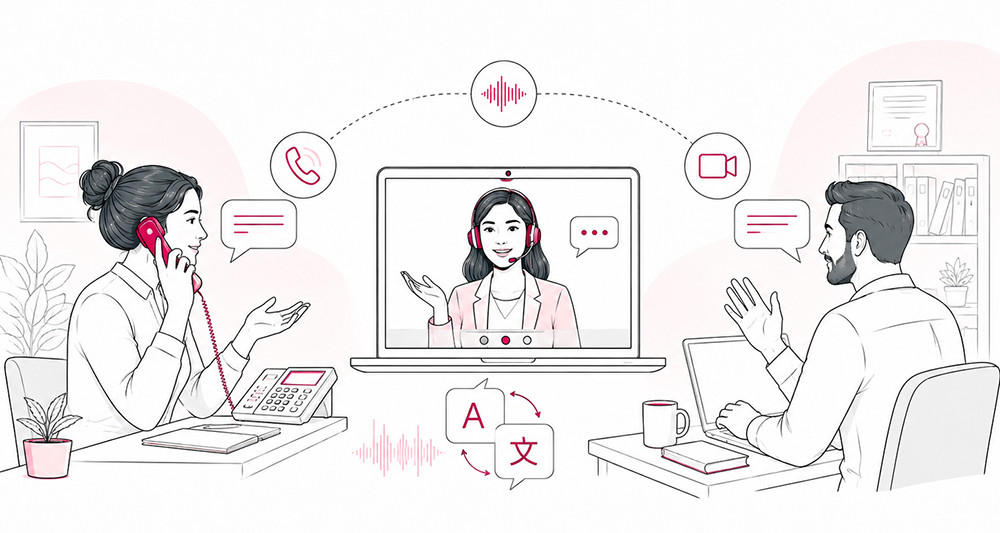
Remote interpreting brings a professional interpreter into these conversations through a live phone or video connection. It expands access to multilingual support without requiring the interpreter to be physically present with every participant.
Interpreting is distinct from written translation. A translator works primarily with written content, while an interpreter facilitates spoken or signed communication as it happens. The right remote format depends on the complexity, visual context, sensitivity, duration, and communication environment.
Remote Interpreting Options
Choose the Right Interpreting Format
Phone and video interpreting both provide live access to a human interpreter. The right option depends on whether the conversation requires visual information in addition to spoken communication.
OVER-THE-PHONE INTERPRETING
Fast, Practical Language Support by Phone
Over-the-phone interpreting (OPI) connects participants with a professional interpreter through a live audio call. It works especially well when the conversation is primarily verbal and visual context is not essential.
- Customer service and contact-center calls
- Appointment scheduling and intake
- Account, payment, insurance, and benefits inquiries
- Technical support and administrative conversations
- Three-way calls involving participants in different locations
Best suited to short, transactional, unexpected, or audio-first interactions.
Discuss Phone Interpreting RequirementsVIDEO REMOTE INTERPRETING
Visual Context for Complex Conversations
Video remote interpreting (VRI) brings the interpreter into a live video session so participants can see facial expressions, gestures, demonstrations, and other visual information that supports understanding.
- Healthcare and telehealth consultations
- Legal interviews and client meetings
- Employee, education, and parent communication
- Product demonstrations and technical instructions
- Signed-language communication, where available
Best suited to sensitive, relationship-focused, visual, or signed-language interactions.
Discuss Video Interpreting RequirementsHow Stepes Remote Interpreting Works
Stepes coordinates the language, interpreting format, subject expertise, and session requirements so participants can focus on the conversation itself.
01
Share Your Requirements
Tell us the languages, regional preferences, interpreting format, date and time, expected duration, subject matter, participant locations, and any requested qualifications.
02
We Match the Interpreter
Stepes considers language, dialect, subject expertise, phone or video delivery, professional background, availability, and customer-specific requirements.
03
Connect by Phone or Video
Participants join through the agreed telephone, virtual meeting, telehealth, contact-center, or other approved remote communication environment.
04
Communicate with Confidence
The interpreter facilitates the exchange professionally and impartially, helping each participant communicate directly and understand the conversation in real time.
Flexible Support for Immediate and Planned Conversations
Some language needs arise without warning. Others can be anticipated days or weeks in advance. Stepes supports both on-demand and scheduled remote interpreting.
On-Demand Remote Interpreting
Help frontline teams respond when a customer, patient, employee, or community member needs language assistance that was not arranged beforehand.
- Unexpected customer-service or technical-support calls
- Walk-in visitors and unplanned patient interactions
- Account, benefits, public-service, or intake inquiries
- Situations where the preferred language was not known in advance
Scheduled Remote Interpreting
Plan in advance when the conversation is longer, sensitive, highly technical, or dependent on a particular interpreter profile or preparation.
- Medical, legal, financial, and employee consultations
- Training, interviews, negotiations, and technical meetings
- Less commonly requested languages or regional variants
- Sessions requiring preparation materials or requested credentials
Industry Expertise
Professional Interpreters for Specialized Conversations
Language fluency alone may not be enough for complex communication. Stepes considers the setting, terminology, interpreter experience, requested qualifications, confidentiality needs, and customer-specific procedures.
Healthcare and Telehealth
Support patient intake, consultations, treatment discussions, appointment coordination, discharge communication, behavioral health, and patient follow-up with interpreters matched to the setting.
Explore Medical Translation ServicesLegal Communication
Facilitate attorney-client consultations, witness interviews, case preparation, remote depositions, compliance discussions, immigration matters, and internal investigations.
Explore Legal Translation ServicesCustomer Service and Contact Centers
Bring interpreters into live customer calls for account assistance, product questions, technical support, complaint resolution, onboarding, billing, and other service interactions.
Explore Multilingual Customer SupportFinancial Services and Insurance
Support account-service calls, claims, policyholder assistance, benefits explanations, loan discussions, fraud-related interviews, and other conversations involving financial terminology.
Explore Financial Translation ServicesGovernment and Community Services
Improve language access for public benefits, housing, social services, community health, constituent services, licensing, administrative interviews, and public information programs.
Global Business and Workforce Communication
Connect employees, candidates, suppliers, executives, and distributed project teams for HR conversations, recruitment interviews, training, negotiations, and technical meetings.
Interpreter Quality
The Right Interpreter for Every Engagement
Strong remote interpreting begins before the phone or video session starts. We evaluate the language, participants, subject matter, delivery format, and professional requirements of the engagement.
Help the Interpreter Prepare
Share relevant agendas, participant roles, product names, acronyms, glossaries, presentation materials, approved terminology, and background information through an agreed channel.
Language and Regional Expertise
Match the interpreter to the language pair, country or region, dialect, participant preferences, and terminology used by the people in the conversation.
Subject-Matter Experience
Consider the communication environment and terminology expected in medical, legal, financial, insurance, technical, government, or customer-facing interactions.
Professional Interpreting Skills
Look for active listening, accurate meaning transfer, clear delivery, turn management, impartiality, cultural awareness, confidentiality, and appropriate requests for clarification.
Credentials and Assignment Requirements
Tell us about requested training, certification, screening, or professional experience so we can confirm an appropriate resource based on the assignment and availability.
Enterprise Language Access
Remote Interpreting for Distributed Organizations
Organizations with multiple locations or recurring multilingual interactions need a consistent way to request, coordinate, and evaluate language support across teams.
- Centralized service coordination across teams and locations
- On-demand and scheduled interpreting requests
- Preferred interpreter profiles and recurring-session continuity
- Department, project, matter, or cost-center references
- Customer-specific instructions and terminology preparation
- Usage visibility, service feedback, and program review
Enterprise Program Framework
Flexible configurationService Modes
Phone + Video
Organization Scope
Multiple Teams
Access Model
On-Demand + Scheduled
Your program can be structured around the teams, service modes, interpreter profiles, and coordination needs most relevant to your organization.
Human Expertise, Digital Delivery
Technology-Enabled, Professionally Interpreted
Technology makes remote language access easier to request, coordinate, deliver, and manage. The quality of consequential multilingual communication still depends on choosing the right format and applying professional judgment.
- Interpreter matching
- Scheduling and request administration
- Remote participant connection
- Terminology preparation
- Program coordination
- Usage visibility and feedback
Privacy and Confidentiality
Protecting Sensitive Multilingual Conversations
Remote sessions may involve personal, medical, legal, financial, commercial, or employment information. The interpreting setup should reflect the sensitivity of the engagement.
Discuss Your Security RequirementsConfidentiality
Interpreters are expected to handle customer information professionally and limit its use to the interpreting engagement.
Appropriate Communication Environments
Use private locations, approved devices and platforms, protected access details, and only the participants who need to attend.
Customer-Specific Procedures
Share requirements involving access controls, confidentiality agreements, data handling, recording, interpreter screening, or regulated information before the session.
Remote Interpreting Across Global Languages
Stepes supports remote interpreting across more than 100 languages, including major international languages, regional variants, specialized dialects, and less commonly requested combinations, subject to interpreter availability.
Availability depends on the language, dialect, phone or video format, signed or spoken communication, subject specialization, requested credentials, time of day, session length, and advance notice.
Explore Our LanguagesRegional Language Expertise Matters
Country, region, dialect, professional terminology, and participant preferences can affect interpreter selection. Advance scheduling is strongly recommended for less common language combinations, specialized dialects, signed languages, or credential-specific requests.
Why Stepes
A Modern Approach to Professional Interpreting
Stepes combines professional language expertise with efficient digital service delivery to help organizations communicate across languages and locations.
Interpreter Matching That Reflects the Engagement
We consider language, regional variety, industry, delivery format, requested qualifications, and availability instead of assigning solely on the language pair.
Phone and Video Flexibility
Choose the format that fits the participants, equipment, complexity, and communication goal rather than forcing every conversation into the same workflow.
Immediate and Scheduled Support
Use on-demand service for frontline communication and schedule specialized, sensitive, longer, or credential-specific sessions in advance.
Translation and Interpreting Through One Provider
Coordinate live conversations with document translation, localization, terminology, customer support content, training materials, and global digital experiences.
Remote Interpreting in Practice
See how phone and video interpreting can support realistic multilingual communication needs across different organizations.
TELEHEALTH
Supporting a Patient Consultation
A healthcare organization schedules a video interpreter for a remote appointment and shares the patient’s language, regional preference, clinical subject, expected duration, and approved video environment.
CUSTOMER SUPPORT
Resolving a Multilingual Service Call
A service representative adds a phone interpreter to an existing call, allowing the representative and customer to communicate directly without transferring the issue to a separate language-specific team.
GLOBAL WORKFORCE
Facilitating a Sensitive Employee Meeting
A global employer schedules a video interpreter for an HR conversation involving managers and an employee in different countries, with participants joining from private locations.
Remote Interpreting Questions
Find practical guidance on formats, scheduling, interpreter selection, equipment, confidentiality, pricing, and specialized communication.
Need an Interpreter for an Upcoming Conversation?
Tell us the languages, interpreting format, subject matter, participants, and preferred schedule. Stepes will help you identify the right phone or video interpreting solution.