
Financial AI Translation Review Services
Review and validate AI-translated financial documents with confidence.
AI-generated financial translations can accelerate reporting, but without expert validation, terminology inconsistencies, disclosure misalignment, and numerical errors can create regulatory and investor risk. Stepes provides structured financial AI translation review for SEC filings, annual reports, prospectuses, ESG disclosures, and other regulated financial documents.
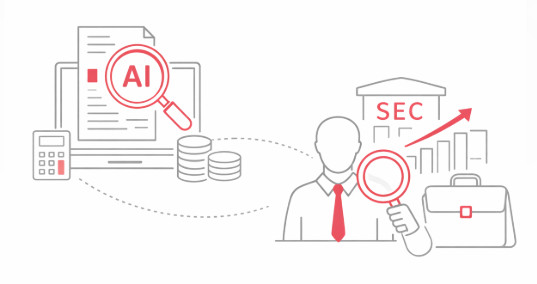

Why AI-Translated Financial Content Requires Expert Review
AI-generated translations can accelerate financial reporting cycles, but financial content is not standard marketing copy. It contains defined accounting terminology, regulatory disclosure language, numerical references, and cross-document dependencies that require subject-matter precision. Without structured expert oversight, AI output can introduce subtle inconsistencies that create compliance, reputational, and investor risk.
AI systems often produce variations in terminology. In financial reporting, terms such as “operating income,” “net income,” or “adjusted EBITDA” must remain consistent and aligned with internal glossaries and prior-period filings. Our review verifies that terminology reflects correct accounting standards and matches prior disclosures.
AI models may translate terms literally without recognizing technical accounting meanings under IFRS or US GAAP. Even minor shifts can alter interpretation in audited statements. Our specialists confirm that accounting terminology accurately reflects the intended framework and jurisdiction.
Filings like 10-K, 10-Q, and prospectuses require precise alignment. AI-generated translations may unintentionally change the scope or tone of disclosures. Expert reviewers assess defined terms, risk factors, and forward-looking statements to reduce regulatory exposure across jurisdictions.
Investor presentations and earnings releases are often market-moving. Subtle shifts in tone can affect confidence. Professional review ensures that key performance metrics and guidance language remain accurate and aligned with corporate messaging.
Financial documents are interconnected (e.g., risk factors referencing footnotes). AI may handle sections independently. Expert review verifies cross-references, defined terms, and numerical data consistency across the entire document set to support audit readiness.
Regulated entities rely on longitudinal consistency. By reviewing AI output against prior filings and approved glossaries, we maintain reporting continuity and reduce ambiguity across annual and quarterly disclosures.
In regulatory or legal contexts, certified translations may be requested. In these cases, AI output is professionally reviewed to a certifiable standard and accompanied by official documentation. Even without certification, structured review provides defensible quality control.

Financial Documents We Review and Validate
Stepes provides structured financial AI translation review across a wide range of regulated reporting and investor-facing documents. Our specialists review AI-translated financial statements, validate accounting terminology, confirm disclosure alignment, and assess numerical consistency to support compliance, audit readiness, and investor confidence.
Annual reports contain consolidated financial statements, MD&A, and risk disclosures. Our review verifies terminology consistency, accounting framework alignment, and cross-references, with particular attention to notes to financial statements and performance metrics that must match prior periods.
Quarterly and annual filings require precise alignment. We examine regulatory terminology, risk factor wording, and material disclosures to reduce regulatory exposure and maintain defensible reporting standards within the AI-translated filing.
Capital markets documents demand strict precision. We review AI-generated translations for defined term consistency, financial metric accuracy, and legal disclosure alignment to ensure investor-facing language reflects the original intent without ambiguity.
Investor decks often summarize key strategy and KPIs. Our process confirms that translated materials accurately reflect financial terminology and forward-looking guidance, maintaining clarity across global investor communications.
Earnings announcements are market-moving. We validate revenue figures, adjusted metrics, and performance commentary against previously disclosed results to mitigate reputational risk and support accurate public communication.
ESG reporting integrates financial and non-financial data. We verify terminology consistency, KPI alignment, and cross-document references to ensure sustainability disclosures align with financial reporting and regulatory expectations.
Shareholder letters and proxy materials require careful tone management. Our review confirms alignment between financial data, narrative commentary, and defined terms to preserve credibility and investor trust.
M&A involves multilingual transaction summaries and valuations. We review documents for consistency in financial terminology and disclosure language across jurisdictions to support transactional clarity.
Regulatory submissions must reflect exact terminology and numerical precision. We validate alignment with accounting standards and reporting conventions to support compliance in cross-border environments.
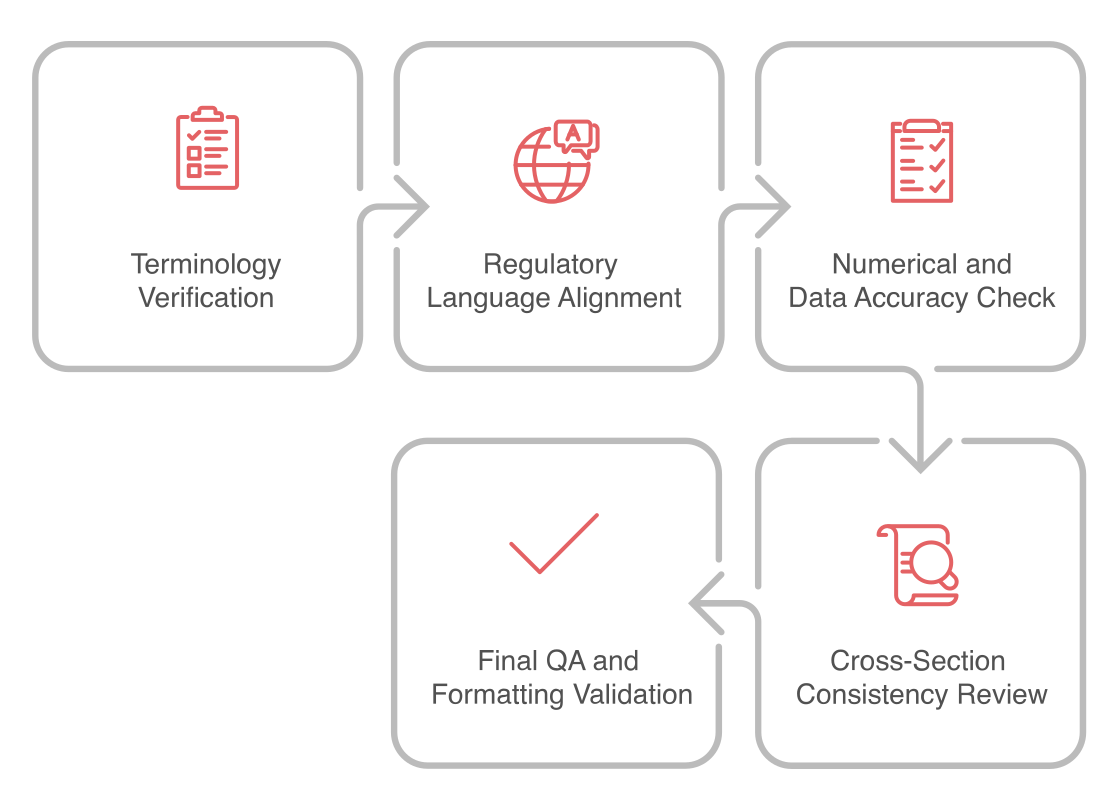
Our AI Financial Translation Validation Process
Financial reporting demands more than linguistic fluency. It requires structured verification of accounting terminology, disclosure language, numerical integrity, and document-wide consistency. Our AI financial translation validation process is designed specifically for regulated financial content and goes well beyond standard proofreading or generic post-editing.
This is not simple proofreading. This is structured financial validation built for compliance-sensitive reporting environments.
AI systems may generate language that deviates from internal standards. Our first step focuses on rigorous terminology control, verifying:
- Alignment with accounting standards (IFRS/US GAAP)
- Consistency with approved corporate glossaries
- Defined term accuracy across all document sections
- Alignment with terminology used in prior filings
Financial disclosures must mirror the exact intent of the source document to avoid interpretive shifts in regulated filings. We assess:
- Disclosure precision and clarity
- Forward-looking statement consistency
- Risk factor language alignment
- Jurisdiction-specific terminology requirements
This stage strengthens the validation of financial statements by confirming data integrity. We review:
- Tables, figures, and financial statements
- Footnotes and explanatory notes
- Percentage expressions and financial ratios
- Cross-references between different sections
Financial documents are interconnected. This document-wide analysis distinguishes our structured review from basic post-editing by verifying:
- Defined terms alignment across all sections
- Risk factor consistency throughout the report
- Uniformity between narrative text and financial statements
- Alignment between ESG disclosures and financial data
The final stage ensures readiness for distribution, filing, or investor communication by confirming:
- Formatting preservation and layout consistency
- Proper treatment of headings, numbering, and tables
- Compliance-ready document presentation
- Clear traceability for internal audit purposes

When to Use AI-Led Drafting with Financial Validation vs Human-Led Financial Translation
Modern financial translation workflows combine human expertise with advanced linguistic technology, including translation memory, terminology databases, and secure AI-assisted tools. The distinction today is not whether AI is used, but where primary drafting control sits in the process and how much regulatory or market risk is involved.
Understanding when to use an AI-led workflow with structured financial validation versus a human-led financial translation approach helps organizations balance efficiency, risk management, and compliance requirements.
In this model, AI generates the initial draft, and financial specialists conduct a comprehensive validation process to confirm terminology accuracy, regulatory alignment, and numerical consistency.
| Appropriate Use Case | Why This Approach Works |
| Internal drafts | Early-stage financial documents can benefit from rapid AI drafting followed by expert validation before external release. |
| Recurring reporting cycles | Repetitive disclosures and periodic updates often contain consistent terminology that can be efficiently reviewed and validated. |
| Budget-optimized multilingual disclosures | Organizations seeking efficiency can leverage AI drafting with structured AI financial translation review to maintain quality control. |
| Non-market-moving content | Informational materials with lower regulatory sensitivity can be supported by AI translated financial statements validation under expert oversight. |
In these scenarios, AI-led drafting combined with financial validation strengthens efficiency while maintaining terminology control, disclosure consistency, and compliance alignment.
In this model, a financial linguist drafts the translation directly from the source text, using translation memory, terminology systems, and secure AI-assisted tools to support consistency and productivity.
| Appropriate Use Case | Why This Approach Is Recommended |
| IPO documentation | Listing materials and prospectuses require maximum drafting control and precision from the outset. |
| Litigation-sensitive disclosures | Documents with potential legal exposure benefit from direct human drafting oversight. |
| High-risk regulatory filings | Complex or high-scrutiny filings may warrant a human-led workflow to reduce interpretive risk. |
| Market-moving announcements | Earnings surprises, mergers, or significant corporate events require careful linguistic judgment and tone management. |
| First-time jurisdiction entry | Entering a new regulatory environment often requires deliberate terminology establishment and compliance sensitivity. |
Human-led financial translation provides enhanced drafting control while still benefiting from structured terminology systems and advanced linguistic tools.
Both models incorporate professional financial expertise and structured quality control. The appropriate choice depends on the document’s regulatory exposure, investor sensitivity, and risk profile.
AI-led drafting with expert financial validation can support efficiency in controlled environments. Human-led financial translation may be preferable for high-stakes capital markets activity, complex regulatory filings, or litigation-sensitive disclosures.
If you require comprehensive multilingual financial reporting support from initial drafting through final quality assurance, explore our Financial Translation Services for full-service financial translation solutions.

Risk Management and Confidential Financial Data Handling
Financial reporting documents often contain market-sensitive information, non-public financial data, strategic disclosures, and forward-looking statements. Protecting this information throughout the translation workflow is as critical as linguistic accuracy. Our enterprise financial translation validation framework is built to support regulated reporting environments where confidentiality, traceability, and security are non-negotiable.
All financial documents are handled through secure channels and access-controlled environments. Permissions are restricted by role, ensuring only authorized personnel access sensitive materials. This model supports:
- Segregation of client data
- Role-based document permissions
- Limited exposure to confidential information
- Clear accountability throughout the workflow
All specialists operate under formal confidentiality agreements. For compliance-sensitive engagements, additional client-specific NDAs can be implemented. Our team understands the sensitivity of earnings announcements, IPO documentation, and M&A disclosures.
Stepes leverages AWS security architecture to support data protection and reliability. This infrastructure provides:
- Encrypted data storage and transmission
- Infrastructure-level security controls
- Segregated client environments
Our workflows provide traceability for regulated environments, recording project stages, reviewer actions, and version history. Audit-ready data includes validation checkpoints, reviewer attribution, and revision tracking to support internal governance.
Financial AI translation review is executed within structured workflows tailored for regulated industries. We manage risk across terminology, disclosure alignment, numerical integrity, and data protection simultaneously to ensure reporting integrity.

Why Choose Stepes for Financial AI Translation Review
Financial reporting requires more than linguistic accuracy. It demands subject-matter expertise, regulatory awareness, and structured risk control. Stepes provides financial AI translation review built specifically for regulated reporting environments, differentiating us from generic MTPE vendors focused primarily on cost reduction.
Our approach emphasizes risk-managed AI validation, not budget post-editing.
Our reviewers are experienced in financial reporting, accounting standards (IFRS/US GAAP), and capital markets. This depth strengthens the validation of AI-translated financial statements and ensures accurate terminology alignment across all sections, including MD&A and investor disclosures.
We support organizations preparing 10-K, 10-Q, prospectuses, and ESG disclosures. Our specialists assess regulatory language consistency, defined terms, and risk factor alignment to support defensible reporting in multi-jurisdiction contexts.
Our process is built on defined validation stages rather than ad hoc editing. We embed terminology verification, numerical review, and cross-document consistency checks into the workflow, distinguishing our services from generic post-editing.
Operating within secure, access-controlled AWS environments, we protect market-sensitive financial information at every stage. Our regulated-industry workflows feature encrypted storage, controlled permissions, and formal confidentiality safeguards.
Stepes supports financial AI translation review across all major global markets. Our linguistic network enables organizations to maintain terminology consistency and disclosure alignment across annual reports and investor communications worldwide.
We align with internal finance, legal, and investor relations teams. Our workflows accommodate recurring reporting cycles, version control, and glossary updates, making AI financial translation review a seamless part of your broader compliance framework.
Frequently Asked Questions
Financial AI translation review is a structured process in which financial specialists validate AI-generated translations of regulated financial documents. This includes verifying accounting terminology, disclosure language, numerical accuracy, defined terms, and cross-document consistency. Unlike generic post-editing, it is designed specifically for compliance-sensitive content like SEC filings and annual reports.
AI-generated translations support efficiency, but SEC filings require expert oversight. When validating AI translated SEC filings, specialists review regulatory terminology, risk factors, and forward-looking statements. While AI alone is insufficient, AI-led drafting combined with structured financial validation is appropriate for controlled regulatory environments.
We verify terminology against applicable frameworks such as IFRS or US GAAP, internal corporate glossaries, and prior reporting periods. Our process checks defined terms and financial metrics across the entire document to ensure technical accuracy and consistency, moving beyond basic linguistic correction.
Yes, when supported by professional financial AI review. Earnings releases and investor presentations require careful alignment of KPIs and narrative commentary. Expert validation helps maintain clarity, credibility, and consistency across multilingual investor-facing documents.
The key distinction lies in drafting control and risk level. MTPE (Machine Translation Post-Editing) involves structured validation of AI output, while human-led translation begins with direct subject-matter drafting. The choice depends on regulatory exposure and document sensitivity.
Stepes supports financial AI translation review across all major global business languages. This enables multinational organizations to maintain terminology consistency and disclosure alignment in regulated markets for annual reports and cross-border reporting.
We use access-controlled environments hosted on AWS. Financial documents are managed through encrypted storage, role-based permissions, and formal confidentiality agreements. Our workflows support audit-ready documentation trails and structured governance.
Strengthen the Accuracy and Compliance of Your AI-Generated Financial Translations
AI-generated drafts require expert oversight in regulated financial environments. Our structured financial AI translation review supports terminology precision, regulatory alignment, and investor confidence across multilingual reporting.