
Translation for the Industrial Automation Stack
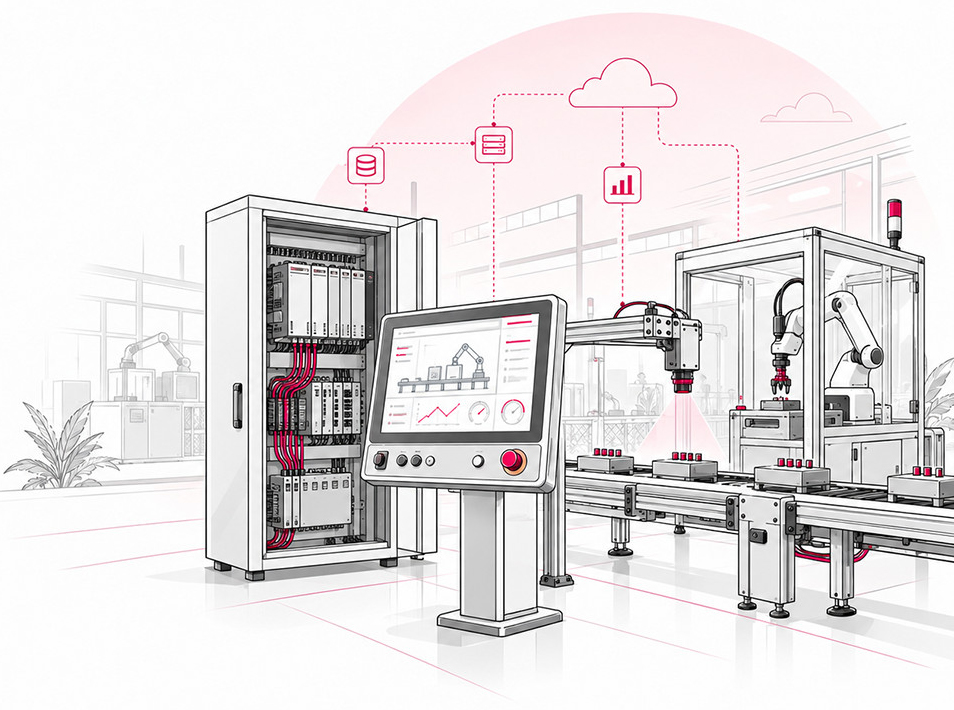
Industrial automation brings together control hardware, software, connected equipment, sensing, operator interfaces, and engineering systems. Stepes helps keep terminology and operating concepts consistent across the systems people use to configure, monitor, operate, and maintain automated equipment.
PLC, Motion & Machine Control
Programmable logic controllers (PLCs), motion controllers, drives, servo systems, machine controllers, configuration environments, diagnostics, parameters, error states, and industrial control system documentation.
HMI & Operator Interfaces
Touchscreens, operator panels, commands, machine status, alarms, warnings, diagnostic messages, maintenance prompts, and setup screens.
SCADA & DCS Systems
Supervisory control, distributed control, process visualization, control-room dashboards, alarm environments, monitoring screens, reports, and supporting documentation.
IIoT, Edge & Industrial Connectivity
Industrial gateways, connected sensors, edge devices, industrial networks, device connectivity, remote monitoring, device management, and cloud-connected industrial applications.
Machine Vision & Industrial Sensing
Inspection systems, vision platforms, sensing technologies, measurement equipment, configuration tools, diagnostics, and related technical content.
Automation Software & Engineering Tools
Programming, configuration, commissioning, monitoring, simulation, diagnostics, engineering, maintenance, and production applications.
Software Localization ServicesLocalize HMI and Operator Interfaces Without Losing Operational Clarity
An industrial HMI may communicate important operating information through only a few words. Commands, states, warnings, alarms, variables, values, units, and abbreviations all depend on equipment context, which makes HMI localization fundamentally different from ordinary text translation.
Machine commands, operating modes, controls, settings, navigation, and action labels.
Warnings, errors, fault states, severity levels, diagnostics, troubleshooting, and service terminology.
Equipment states, production status, values, system feedback, and monitoring content.
Service prompts, diagnostic messages, reminders, troubleshooting, and machine-health information.
Parameter settings, calibration, commissioning tools, machine setup, and configuration interfaces.
Screenshots, string metadata, engineering comments, product references, prototypes, and test environments.
Industrial Software Localization Built for Complex Control Environments
Modern automation products increasingly depend on software. Stepes localizes applications used to configure, operate, monitor, diagnose, and maintain automated systems while protecting variables, tags, keys, placeholders, values, and formatting codes.
Software Localization ServicesTranslate control applications and machine software in their technical and operating context, not as isolated interface strings.
Use engineering references and approved product terminology to resolve specialized commands, functions, parameters, and ambiguous UI language.
Localize setup, parameter, calibration, testing, and commissioning environments used during equipment deployment.
Protect keys, variables, tags, placeholders, values, and formatting while localizing embedded and firmware-facing content.
Keep status, alarm, diagnostic, condition-monitoring, and troubleshooting terminology aligned with supporting documentation.
Localize dashboards, remote-management environments, device portals, and connected industrial applications.
Extend approved terminology to technicians and service teams working with equipment in the field.
Carry translation memory and terminology into release notes, software help, support content, and recurring product updates.
Translate Automation Documentation From Engineering Through Operation
Industrial automation content evolves throughout the equipment lifecycle. Stepes helps keep multilingual engineering, installation, operating, service, and modernization content connected from the first release through years of global operation.
Design & Engineering
Specifications, system requirements, technical datasheets, engineering reports, component information, and automation architecture documentation.
Integration & Installation
Installation guides, integration instructions, equipment requirements, configuration documentation, and technical procedures.
Commissioning
Setup procedures, testing materials, calibration information, verification steps, checklists, and commissioning documentation.
Operation
Operator manuals, machine instructions, SOPs, production procedures, control-system guidance, and reference content.
Maintenance & Service
Service manuals, preventive maintenance, troubleshooting, diagnostics, repair instructions, parts information, and service bulletins.
Updates & Modernization
Firmware releases, software updates, retrofits, control-system modifications, interface revisions, and new configurations.
Protect Meaning Where Industrial Communication Matters Most
Industrial equipment communicates information that can affect machine operation, maintenance decisions, troubleshooting, and workplace procedures. Stepes applies structured terminology management, technical linguists, and quality controls to help preserve technical intent and procedural clarity across languages.
Translate the Next Generation of AI-Powered Automation
Industrial automation is becoming more intelligent as AI and machine learning connect sensing, analytics, software, control environments, and automated equipment. Stepes supports multilingual content across emerging industrial AI applications while keeping terminology grounded in real automation technologies.
Predictive Maintenance
Equipment-health dashboards, maintenance recommendations, anomaly alerts, diagnostic information, and service workflows.
Machine Vision AI
Inspection results, vision-system interfaces, configuration tools, documentation, and training.
Intelligent Diagnostics
Sensor-driven diagnostics, equipment-history analysis, AI-assisted recommendations, and technician-facing information.
Industrial Copilots
Conversational interfaces, AI-assisted engineering applications, knowledge systems, and natural-language support experiences.
Generative & Agentic AI
Emerging automation applications that generate or interpret information and coordinate increasingly complex tasks or workflows.
Autonomous Industrial Systems
Software, interfaces, documentation, and operating content for systems with increasingly autonomous sensing, decision support, and action.
Industrial Automation Meets Robotics
Robotics and industrial automation are increasingly interconnected, but they are not the same localization discipline. Industrial automation focuses on the systems used to control, monitor, coordinate, and connect industrial processes and equipment. Robotics focuses on the robotic platforms and intelligent machines performing physical tasks within those environments.
For the complete robot product lifecycle, including robot software, controllers, perception systems, training, service, deployment, and next-generation robotic platforms, explore our dedicated robotics practice.
Robotics Translation Services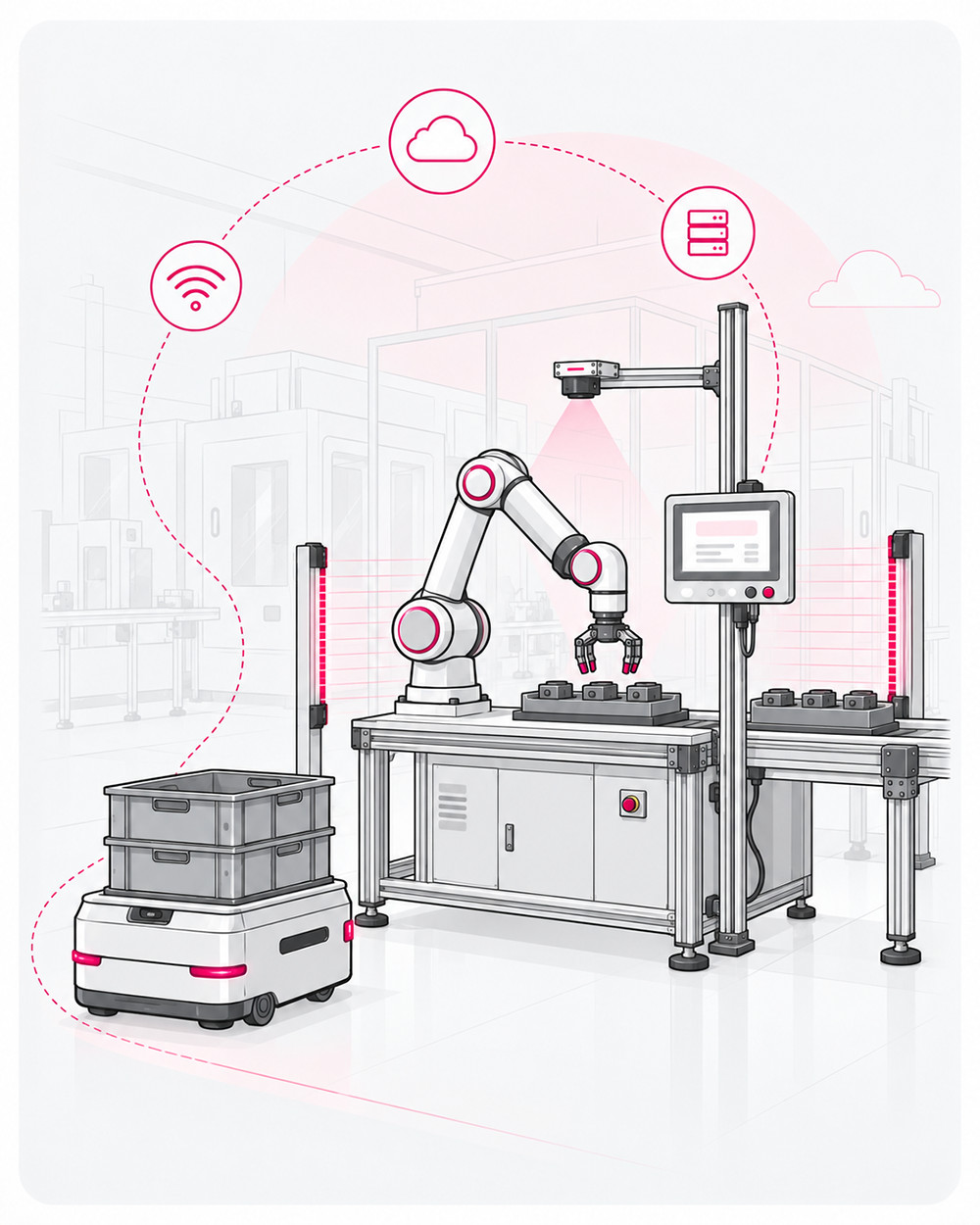
Localization for Connected Industrial Systems
Industrial automation increasingly extends beyond the individual machine. Sensors, controllers, gateways, edge systems, cloud platforms, analytics tools, and remote applications connect equipment across production facilities and enterprise networks.
Industrial IoT Platforms
User interfaces, dashboards, device-management content, configuration environments, documentation, help, and technical support.
Sensors & Connected Devices
Installation, configuration, calibration, diagnostics, operating information, and service content.
Industrial Gateways & Edge Computing
Setup, integration, security, troubleshooting, and management content for industrial edge systems.
Remote Monitoring
Alerts, asset-health information, diagnostics, machine status, service workflows, and remote-management interfaces.
Industrial Analytics
Performance dashboards, condition monitoring, production analytics, reports, and AI-assisted operational insights.
Connected Service
Machine interfaces, technician applications, support platforms, knowledge content, and field-service documentation.
From Industrial Automation to the Smart Factory
Industrial automation controls and coordinates machines, processes, and production systems. Industry 4.0 connects those plant-floor systems into broader digital manufacturing environments where equipment, software, data, people, and enterprise systems increasingly work together.
Industrial Automation
Controls, monitors, coordinates, and connects industrial equipment and processes.
Industry 4.0
Connects automation into data-driven, factory-wide digital manufacturing environments.
Keep Automation Terminology Consistent Across Every Touchpoint
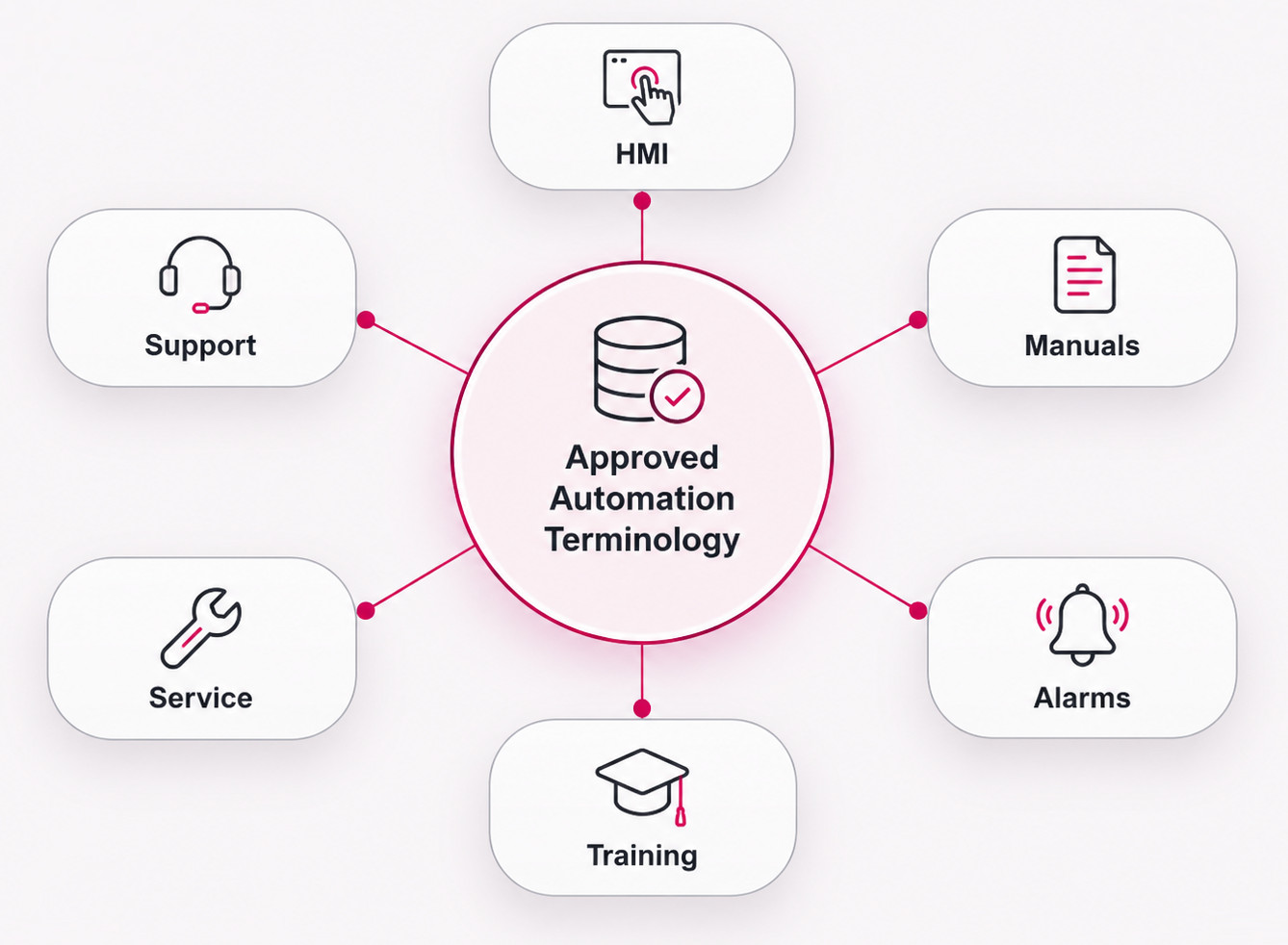
The same technical concept can appear in an operator interface, alarm message, service manual, engineering specification, training course, product website, and field-support system. Stepes builds reusable language assets so approved terms stay aligned throughout the product ecosystem.
Build and maintain approved multilingual terminology for equipment, components, functions, controls, operating states, warnings, and alarms.
Reuse previously approved translations across recurring content, documentation updates, product versions, and related assets.
Give linguists screenshots, diagrams, product documentation, engineering comments, existing terminology, and other contextual references.
Capture terminology decisions from engineering, product, regional, distributor, or customer reviewers and carry them into future work.
Align language across HMI, manuals, alarms, training, service, and support rather than translating each asset in isolation.
Keep Global Automation Content Current With Every Release
Automation products continue to change after launch. Software and firmware evolve, interfaces change, features are added, documentation is revised, and new markets require additional languages. Stepes supports ongoing localization programs that evolve with the product.
Translate only what changed while preserving approved content.
Carry validated translations into new product generations and releases.
Keep approved product language aligned as features and components evolve.
Coordinate UI strings, manuals, release information, service content, and other assets.
Reduce manual handoffs through structured translation and review processes.
Connect recurring content to applications, repositories, content platforms, and enterprise systems.
Match the Translation Workflow to the Content and Risk
A high-visibility HMI warning, an engineering specification, a marketing datasheet, an internal knowledge article, and a recurring software update can require different levels of expertise, review, and automation.
Professional Human Translation
Use professional technical linguists for specialized, high-impact, customer-facing, operational, or technically demanding content where human understanding and judgment are central.
AI Translation + Expert Review
Accelerate suitable high-volume content with AI-generated translation followed by professional linguistic review, terminology application, and quality assurance.
Continuous AI-Powered Workflows
Support rapidly changing software, documentation, support content, and recurring releases with translation memory, terminology, automation, QA, and human review where appropriate.
Industrial Automation Across Global Industries
Automation technology supports production and operations across major industrial sectors. Stepes supports automation vendors as well as the global companies deploying their technologies.
Automotive & EV Manufacturing
Robotic cells, assembly automation, welding, painting, battery manufacturing, inspection, material handling, machine controls, and operator interfaces.
Electronics & Semiconductor
Precision equipment, automated inspection, process control, test equipment, sensing technologies, and complex equipment interfaces.
Industrial Machinery
Machine tools, production equipment, packaging machines, processing systems, control platforms, engineering software, and field-service documentation.
Food & Beverage
Processing, filling, packaging, inspection, conveying, monitoring, production controls, and automated line operations.
Pharmaceutical & Life Sciences
Production equipment, process automation, machine interfaces, monitoring systems, equipment documentation, and controlled manufacturing environments.
Energy & Utilities
Process control, distributed automation, monitoring, industrial instrumentation, field systems, diagnostics, and operational technology.
Warehousing & Logistics
Conveyors, sortation, warehouse controls, automated storage, autonomous material movement, fleet management, and logistics automation.
Packaging
Filling, labeling, wrapping, inspection, coding, palletizing, line controls, and integrated packaging systems.
Translation Support for the Industrial Automation Ecosystem
Automation technologies move through interconnected networks of equipment vendors, software companies, engineering organizations, system integrators, distributors, manufacturing sites, maintenance teams, and regional operations.
Automation Equipment Manufacturers
Take controllers, sensors, industrial electronics, operator devices, and automation products into international markets.
Machine Builders
Localize HMI, manuals, installation information, service content, and operator training as one connected machine experience.
Control-System & Software Vendors
Translate engineering environments, industrial applications, dashboards, monitoring systems, documentation, and support content.
System Integrators
Support international deployments with multilingual engineering, installation, configuration, commissioning, and customer documentation.
Robotics & Autonomous-System Companies
Coordinate factory automation content with the control systems and interfaces surrounding robotic and autonomous equipment.
Global Manufacturers
Standardize multilingual machine documentation, production interfaces, maintenance information, and training across international facilities.
Engineering & Field-Service Organizations
Support technicians and engineers with installation, troubleshooting, maintenance, upgrade, and customer-support content.
Structured Quality for Complex Industrial Content
Industrial automation translation combines language, engineering terminology, software constraints, operating context, and highly structured technical files. Stepes uses a defined quality process to bring those requirements together.
Assess
Review content type, audience, languages, technical subject matter, file format, available context, safety significance, and review requirements.
Prepare
Import translation memories, identify recurring terminology, establish glossaries, protect nontranslatable elements, and organize references.
Translate
Apply professional technical translation, AI-assisted workflows, or another agreed model based on content and quality requirements.
Review
Check linguistic accuracy, terminology, clarity, consistency, numbers, units, variables, warnings, and contextual information.
Validate
Perform appropriate automated QA, formatting checks, interface review, in-context validation, or customer review according to scope.
Deliver & Reuse
Finalize multilingual content and retain approved terminology and translation memory for future updates, languages, and releases.
Secure Translation for Industrial Technology
Automation localization may involve proprietary software, engineering specifications, unreleased equipment, machine designs, technical intellectual property, manufacturing processes, customer information, or internal operating procedures.
Controlled Access
Limit access to files, projects, reviews, and multilingual content according to approved responsibilities.
Confidential Project Handling
Support confidentiality requirements and nondisclosure agreements for sensitive engineering and product information.
Secure Workflows
Use structured enterprise processes for file handling, translation, review, approval, and delivery.
Defined Roles & Approval
Coordinate translators, reviewers, project teams, and customer stakeholders through controlled responsibilities and approval stages.
Industrial Automation Translation in 100+ Languages
Stepes supports translation and localization across Europe, Asia-Pacific, the Americas, the Middle East, and Africa so global automation products can reach the markets where they are sold, installed, operated, and maintained.
Europe
German · French · Italian · Spanish · Dutch · Portuguese · Polish · Czech · Hungarian · Romanian · Swedish · Danish · Finnish · Norwegian · Slovak · Slovenian · Ukrainian
Asia-Pacific
Simplified Chinese · Traditional Chinese · Japanese · Korean · Vietnamese · Thai · Indonesian · Malay · Hindi and additional regional languages
Americas
U.S. English · Latin American Spanish · Brazilian Portuguese · Canadian French and additional regional variants
Middle East & Africa
Arabic · Hebrew · Turkish · Persian and additional regional languages
Why Global Automation Teams Choose Stepes
Industrial automation companies need multilingual content that works across equipment, interfaces, technical teams, software releases, documentation, and international markets.
Technical Language Expertise
Professional linguists selected according to engineering, automation, software, manufacturing, and technical subject requirements.
HMI + Software + Documentation
Coordinate operator interfaces, automation software, manuals, engineering content, training, and service documentation through one multilingual program.
One Terminology System
Maintain approved product and engineering terminology across software, alarms, technical documentation, training, service information, and support.
AI + Human Workflows
Use AI and automation where they improve speed and scale while applying professional human expertise where technical understanding and judgment matter.
Continuous Localization
Support software, firmware, documentation, product variants, and recurring releases without rebuilding the language workflow for every update.
Enterprise Quality & Security
Configure technical review, quality assurance, access, security, and approval according to project requirements.
Industrial Automation Translation in Practice
Industrial automation translation works best when related content is treated as one connected multilingual system rather than a collection of unrelated files.
Global HMI & Machine Launch
A machine builder is preparing an equipment platform for multiple international markets. The HMI, operator manual, installation instructions, maintenance documentation, and terminology must remain aligned.
Establish shared terminology and translation memory, localize the operator interface with visual context, translate supporting documentation, and reuse approved language across related assets.
A more consistent multilingual product experience from the machine screen through operation and maintenance documentation.
Continuous Automation Software Localization
An industrial software company releases recurring updates to dashboards, configuration tools, diagnostic features, and help content across multiple languages.
Separate new and modified content, apply existing translation memory and terminology, route updates through the appropriate AI and human workflow, and carry approved translations into future releases.
A repeatable localization process that grows with the product rather than requiring a new workflow for every software release.
Multilingual Connected Factory
A global manufacturer operates automation systems across several facilities and needs terminology consistency between operator interfaces, SCADA content, maintenance procedures, training, and technical documentation.
Create centralized language assets and apply them across multiple automation content types while coordinating review and updates between global and regional teams.
A more consistent multilingual operating environment across machines, documentation, and workforce content.
Frequently Asked Questions About Industrial Automation Translation
Take Your Industrial Automation Technology Global
From PLC and HMI interfaces to automation software, IIoT platforms, technical manuals, training, service documentation, and evolving product releases, Stepes helps industrial automation companies build one consistent multilingual experience across technologies, users, and global markets.