
Multilingual Voice and Conversation Data Collection
Build high-quality multilingual voice data for conversational AI, ASR, and TTS systems with real-world speech collection, transcription, and structured annotation.
From speech data collection to intent tagging and evaluation, Stepes supports scalable voice AI data workflows across languages, accents, and use cases.
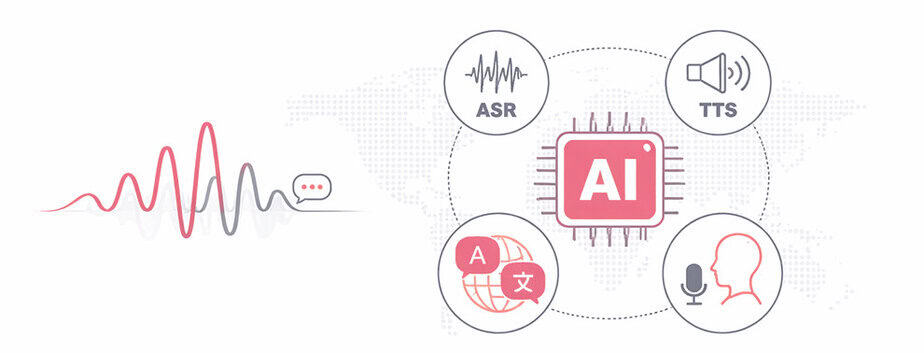

Multilingual Voice Data for Real-World AI Performance
Voice-enabled AI systems are only as strong as the data used to train and evaluate them. While many models perform well in controlled environments, real-world speech presents far greater complexity. Variations in accents, dialects, speaking speed, background noise, and conversational style can significantly impact accuracy and user experience.
Multilingual voice data collection addresses these challenges by capturing how people actually speak across different languages and regions. This includes not only clearly articulated speech, but also spontaneous conversations, informal phrasing, code-switching between languages, and natural variations in tone and delivery. Without this diversity, AI models often struggle when deployed in real-world environments.
For applications such as automatic speech recognition (ASR), text-to-speech (TTS), voice assistants, and conversational AI, high-quality multilingual speech datasets are essential. These datasets help improve recognition accuracy, enhance speech synthesis naturalness, and support more reliable intent detection across languages.
Stepes supports the collection and structuring of multilingual voice and conversation data designed to reflect real-world usage. By incorporating diverse speakers, regional accents, and authentic interaction patterns, we help organizations build AI systems that perform more consistently across global markets and user scenarios.

What We Collect: Multilingual Voice and Conversation Data Types
Stepes supports a wide range of multilingual voice and conversation data collection workflows designed for AI training, testing, and evaluation. From structured recordings to natural dialogue capture, we help organizations build high-quality speech datasets that reflect real-world language use across regions, accents, and use cases.
Collect guided voice samples using predefined prompts to support pronunciation coverage, keyword testing, and controlled dataset creation. Scripted recordings are ideal for ASR training, TTS validation, and command recognition scenarios where consistency and repeatability are required.
Capture natural, unscripted speech that reflects how people actually communicate. This includes variations in phrasing, pauses, hesitations, and informal language patterns, helping improve model performance in real-world conversational settings.
Record two-speaker or multi-speaker interactions to support conversational AI, dialogue systems, and virtual assistants. These datasets include turn-taking behavior, interruptions, clarifications, and contextual responses that are critical for dialogue modeling.
Recruit speakers across regions to represent different accents, dialects, and language variants. This helps improve model robustness and reduces bias, especially for global applications where pronunciation and speech patterns vary significantly.
Design and collect conversations based on real-world scenarios such as customer support, healthcare interactions, financial services inquiries, or onboarding flows. These structured dialogues provide contextual training data aligned with specific use cases.
Collect short-form speech data for voice commands, wake words, and trigger phrases. This supports voice-enabled systems that rely on accurate keyword detection and low-latency response.
Convert raw audio into structured text with timestamps, speaker identification, and utterance boundaries. Accurate transcription and segmentation are essential for downstream training, evaluation, and annotation workflows.
Annotate speech data with intent categories, entities, and dialogue functions. This supports tasks such as intent classification, spoken language understanding (SLU), and conversational AI training.
Evaluate AI-generated speech for pronunciation accuracy, fluency, naturalness, and cultural appropriateness. This helps improve TTS systems and voice outputs across languages and markets.
Capture and organize metadata such as speaker demographics, language variants, recording conditions, and device types. Structured datasets improve usability, traceability, and alignment with model training requirements.

AI Use Cases Supported by Multilingual Voice Data
Multilingual voice and conversation data plays a critical role in training and evaluating modern AI systems that rely on speech input and output. Stepes supports a wide range of voice AI use cases by providing high-quality, structured datasets tailored to real-world language variability, regional accents, and domain-specific interactions.
Train and improve ASR models with multilingual speech datasets that include diverse accents, speaking styles, and recording conditions. High-quality voice data helps increase transcription accuracy, reduce error rates, and improve performance across global user bases.
Support TTS model development and evaluation with curated voice recordings and structured datasets. Multilingual voice data helps improve pronunciation accuracy, naturalness, prosody, and consistency across different languages and voices.
Build more responsive and accurate voice assistants by training models on real-world conversational data. Multilingual datasets help virtual agents better understand user intent, handle varied phrasing, and respond appropriately across languages and regions.
Enhance dialogue systems with multi-turn conversation datasets that reflect natural human interactions. This includes turn-taking behavior, context handling, and diverse expression patterns essential for conversational AI performance.
Enable voice-driven customer support solutions with multilingual datasets that reflect real customer interactions. These datasets support speech recognition, intent detection, sentiment analysis, and call analytics across languages.
Train SLU models using annotated voice data that includes intent labels, entities, and dialogue functions. This improves the system’s ability to interpret user meaning from spoken input, even with linguistic variability.
Develop and test voice-triggered systems using datasets of wake words, commands, and short utterances. Multilingual coverage helps improve detection accuracy and responsiveness across different accents and environments.
Support AI systems that combine speech recognition with downstream NLP tasks such as classification, summarization, and information extraction. Multilingual voice data ensures better alignment between spoken input and language processing outputs.
Languages, Accents, and Speaker Recruitment
High-quality multilingual voice datasets depend on the right speakers. Stepes focuses on targeted speaker recruitment and language coverage to help AI systems perform reliably across real-world markets, accents, and communication styles.
Stepes supports multilingual voice data collection across 100+ languages, including widely spoken global languages as well as region-specific and lower-resource languages. This allows organizations to build speech datasets that align with their target user base and geographic expansion plans.
We recruit speakers across countries and regions to capture authentic accent and dialect variation. This includes differences in pronunciation, vocabulary, and speech patterns that are critical for improving ASR accuracy, TTS naturalness, and overall voice AI performance. Our approach helps create more representative accent datasets and dialect speech data for global applications.
Stepes designs recruitment programs based on project-specific requirements, including geography, language variant, and use case. Whether you need broad population coverage or highly targeted speaker groups, we align recruitment strategies to your dataset goals.
We support speaker selection based on age, gender, education level, and other demographic factors where relevant. This helps reduce bias and improves model performance across different user segments and real-world scenarios.
All contributors are screened based on language proficiency, accent requirements, and project-specific guidelines. Additional screening can include recording environment checks, device requirements, and speech quality validation to meet dataset standards.
Leveraging Stepes’ global network of linguists and language professionals, we support scalable multilingual speaker recruitment for both small pilot datasets and large enterprise AI initiatives. This enables consistent data collection across multiple languages, regions, and project phases.
By combining structured recruitment, accent and dialect balancing, and rigorous screening, Stepes helps organizations build multilingual voice datasets that better reflect real-world speech variability and improve AI performance across global audiences.
Voice Data Collection Workflows and Methodologies
Collecting high-quality multilingual voice data requires more than recording audio. It involves structured workflows, clear instructions, controlled variability, and consistent quality checks across languages and regions. Stepes supports flexible voice data collection methodologies designed to align with specific AI training and evaluation goals, while maintaining consistency and scalability across projects
Stepes supports remote voice data collection using web and mobile-based recording workflows. Contributors can record speech using controlled interfaces that guide prompts, capture audio, and enforce quality requirements. This approach enables scalable multilingual speech data collection across global regions while maintaining standardized formats and instructions.
For projects that require higher control or specialized scenarios, we support moderated recording sessions. These may include live supervision, guided interactions, or structured interview-style recordings to improve consistency and capture specific speech patterns or use cases.
For conversational datasets, we pair speakers and assign roles to simulate real-world interactions. This includes customer-agent dialogues, task-based conversations, and scenario-driven exchanges. Structured role assignment helps generate more natural and contextually relevant multi-turn conversations.
Effective speech data collection starts with well-designed prompts. Stepes works with clients to develop scripts, conversation scenarios, and task flows that reflect real user behavior. This includes balancing controlled prompts with open-ended responses to capture both consistency and natural variability.
To improve real-world performance, datasets often include variability in recording conditions. Stepes supports collection across different devices, microphones, and environments, including quiet settings and controlled background noise scenarios, depending on project requirements.
Each recording can be accompanied by structured metadata, including language, region, speaker profile, device type, and recording conditions. Proper metadata capture improves dataset usability, filtering, and alignment with model training requirements.
Quality control is integrated throughout the collection process. This includes automated checks, manual review, and defined acceptance criteria for audio clarity, completeness, and adherence to instructions. When needed, we support re-recording workflows to replace low-quality or non-compliant audio, ensuring final dataset consistency.
By combining flexible collection methods with structured processes and quality controls, Stepes delivers multilingual voice datasets that are reliable, scalable, and aligned with real-world AI deployment needs.
Transcription, Annotation, and Multilingual Data Processing
Multilingual voice data becomes truly valuable when it is accurately transcribed, structured, and annotated for downstream AI training and evaluation. Stepes provides end-to-end multilingual data processing services that transform raw audio into high-quality, structured datasets aligned with model requirements.
We convert speech recordings into precise, time-aligned transcripts across languages. This includes speaker segmentation, utterance boundaries, and timestamping to support ASR training, alignment tasks, and dataset structuring. Our workflows handle both clean and noisy audio, as well as multi-speaker conversations.
For conversational datasets, we label and track speaker turns to preserve dialogue structure. This is critical for training conversational AI systems that rely on turn-taking, context, and speaker-specific behavior.
Stepes annotates voice data with structured labels such as intents, entities, and dialogue functions. This supports spoken language understanding, intent classification, and conversational AI workflows. Annotation guidelines are defined upfront to maintain consistency across languages and annotators.
We support a wide range of annotation tasks, including utterance labeling, sentiment tagging, entity recognition, and dialogue act classification. Learn more about our Multilingual Text Annotation Services to see how we handle large-scale multilingual annotation projects across domains.
For AI-generated speech and conversational outputs, Stepes provides structured evaluation workflows to assess accuracy, fluency, naturalness, and appropriateness. This includes human review of model responses across languages. Explore our Multilingual AI Output Review Services for more details on evaluation frameworks.
As voice and language models become more integrated, we support evaluation workflows that combine speech input with language model outputs. This includes prompt-response validation, multilingual consistency checks, and scenario-based testing. See our Multilingual LLM Evaluation Services for comprehensive model evaluation support.
Stepes also supports end-to-end conversational dataset creation, combining voice collection, transcription, annotation, and evaluation into a unified workflow. Learn more about our Conversational AI Training Data Services to see how we help build structured datasets for dialogue systems and virtual assistants.
By integrating transcription, annotation, and multilingual data processing into a cohesive workflow, Stepes helps organizations create high-quality voice datasets that are ready for AI training, testing, and continuous improvement across global languages.

Quality Assurance for Multilingual Voice Data
High-quality multilingual voice datasets require structured quality control at every stage, from speaker recruitment to final delivery. Stepes applies defined QA workflows across collection, transcription, and annotation to improve consistency, accuracy, and usability for AI training and evaluation. This approach helps reduce noise in datasets and supports more reliable model performance across languages.
All contributors are screened based on language proficiency, accent requirements, and project-specific criteria. Screening may include sample recordings, language validation, and environment checks to confirm contributors meet defined dataset standards.
We define clear recording guidelines covering audio clarity, background noise levels, microphone quality, and speaking conditions. Automated and manual checks are used to identify issues such as clipping, distortion, incomplete recordings, or deviations from prompts.
Transcriptions are reviewed for accuracy, completeness, and alignment with audio. This includes validation of timestamps, speaker segmentation, and handling of hesitations, fillers, and non-speech elements. Multi-pass review workflows can be applied for high-sensitivity datasets.
All annotation tasks are supported by detailed guidelines that define labeling rules, edge cases, and examples. This helps maintain consistency across annotators and languages, especially for intent tagging, entity labeling, and dialogue classification.
For multilingual projects, language leads provide oversight to validate linguistic accuracy, annotation consistency, and cultural appropriateness. This layer of review helps maintain quality across different language teams and regional variations.
We apply cross-language checks to identify inconsistencies in labeling, interpretation, or dataset structure across languages. This is particularly important for multilingual AI systems that require alignment between datasets in different languages.
Structured sampling and validation processes are used to monitor dataset quality throughout the project lifecycle. This includes spot checks, batch validation, and feedback loops to correct issues early and maintain consistent output quality at scale.
By combining contributor screening, defined standards, and multi-layered review processes, Stepes delivers multilingual voice datasets that are more consistent, reliable, and aligned with the needs of enterprise AI training and evaluation workflows.

Deliverables and Dataset Formats
Stepes delivers multilingual voice datasets in structured, ready-to-use formats aligned with your AI training and evaluation workflows. Our deliverables are designed to integrate smoothly with common machine learning pipelines, data platforms, and annotation frameworks, making it easier to move from data collection to model development.
We provide high-quality audio recordings in standardized formats such as WAV or MP3, based on your project requirements. Audio can be organized by language, speaker, scenario, or dataset split (training, validation, test) to support efficient model training.
Each audio file can be paired with accurate transcripts that reflect spoken content, including natural speech elements such as pauses, fillers, and informal phrasing. Transcripts are delivered in structured formats suitable for ASR and NLP workflows.
Time-aligned data includes timestamps for utterance boundaries, speaker turns, or word-level alignment when required. This supports tasks such as forced alignment, speech recognition training, and conversational modeling.
For multi-speaker recordings, we provide clear speaker identification and labeling. This preserves conversational structure and supports dialogue system training, speaker diarization, and interaction analysis.
Annotated datasets can include intent labels, entities, dialogue acts, or other classification layers. These structured labels support spoken language understanding, conversational AI training, and downstream analytics.
We capture and deliver structured metadata associated with each recording, including language, region, accent, speaker profile, device type, and recording conditions. Metadata can be customized to match your schema and data ingestion requirements.
Each dataset can be accompanied by quality reports that summarize validation checks, sampling results, and issue resolution. This provides transparency into dataset quality and helps support internal review or audit requirements.
Deliverables can be packaged in formats such as JSON, CSV, or other client-defined schemas to align with your data pipelines. We support dataset organization by project, language, use case, or model stage to facilitate efficient integration and reuse.
By delivering structured, well-documented datasets with aligned audio, transcripts, annotations, and metadata, Stepes helps organizations accelerate AI development and improve the reliability of multilingual voice models in production environments.

Why Stepes for Multilingual Voice Data Collection
Stepes provides a multilingual-first approach to voice and conversation data collection, combining language expertise, structured workflows, and scalable delivery to support enterprise AI initiatives. Unlike generic crowd-based data providers, we focus on linguistic quality, consistency, and real-world applicability across languages and markets.
Our voice data collection workflows are built around multilingual requirements from the start. This includes language-specific prompt design, localized instructions, dialect considerations, and culturally appropriate data capture. The result is more accurate and representative datasets for global AI deployment.
Stepes supports the full lifecycle of voice data creation, including collection, transcription, annotation, and evaluation. By integrating these steps into a unified workflow, we reduce handoff errors, improve consistency, and deliver datasets that are ready for training and evaluation without additional processing.
We leverage a global network of professional native linguists and language specialists to support voice data projects. This allows us to handle complex multilingual requirements, including low-resource languages, regional dialects, and domain-specific terminology, with a higher level of linguistic accuracy than general crowd platforms.
Our projects follow defined QA processes across all stages, including contributor screening, transcription validation, annotation consistency checks, and language lead review. This structured approach helps improve dataset reliability and supports more consistent AI model performance.
Stepes supports both pilot projects and large-scale data collection initiatives across multiple languages and regions. Our workflows are designed to scale efficiently while maintaining quality, making it easier to expand datasets as AI programs grow.
We align our deliverables with enterprise data requirements, including structured formats, metadata schemas, and QA reporting. Our datasets are designed to integrate with existing AI pipelines, supporting faster deployment and ongoing model improvement.
By combining multilingual expertise, integrated workflows, and scalable operations, Stepes helps organizations build high-quality voice datasets that perform reliably across real-world languages, accents, and conversational scenarios.
Related AI Data Services
Stepes provides a full suite of multilingual AI data services that extend beyond voice data collection. These services are designed to support the complete AI lifecycle, from data creation and annotation to model evaluation and output validation. By combining these capabilities, organizations can build, test, and refine AI systems with greater accuracy and consistency across languages.
Evaluate AI-generated content across languages for accuracy, fluency, and contextual appropriateness. This includes reviewing translated text, generated responses, and spoken outputs to identify errors, inconsistencies, and areas for improvement.
Structure and label multilingual datasets for machine learning applications. Services include intent tagging, entity recognition, sentiment annotation, and classification tasks that support NLP and conversational AI training.
Assess large language model performance across languages using structured evaluation frameworks. This includes prompt-response validation, multilingual consistency checks, and scenario-based testing to improve model reliability.
Build complete datasets for conversational AI systems, including dialogue creation, utterance annotation, and scenario-based data collection. These services support virtual assistants, chatbots, and voice-enabled applications.
By connecting voice data collection with annotation, evaluation, and review services, Stepes helps organizations develop more accurate, scalable, and multilingual AI systems across the entire data and model lifecycle.
Frequently Asked Questions
Multilingual voice data collection is the process of gathering spoken audio across multiple languages for AI training, testing, and evaluation. This includes recording speech, capturing conversations, and structuring the data with transcripts, annotations, and metadata to support voice-enabled AI systems.
Stepes collects a wide range of speech data, including scripted recordings, spontaneous speech, multi-turn conversations, command and wake word utterances, and scenario-based dialogues. We also support transcription, segmentation, and annotation to create fully structured datasets.
Yes. We support multi-speaker and multi-turn conversation data collection, including role-based dialogues and real-world interaction scenarios. These datasets are commonly used for conversational AI, virtual assistants, and dialogue system training.
Yes. We recruit speakers based on language, region, accent, and dialect requirements. This includes targeted recruitment for specific markets or user groups to help improve model performance across diverse speech patterns.
Yes. In addition to voice data collection, Stepes provides transcription, segmentation, speaker labeling, intent tagging, and other annotation services to deliver structured datasets ready for AI training and evaluation.
Our multilingual voice data services support a wide range of applications, including automatic speech recognition (ASR), text-to-speech (TTS), voice assistants, conversational AI, call center AI, and spoken language understanding.
We apply structured quality control processes across all stages, including contributor screening, recording standards, transcription validation, annotation guidelines, and multi-layered review workflows. This helps improve dataset accuracy and consistency across languages.
Stepes supports multilingual voice data collection across 100+ languages, including regional and dialect variations. We can tailor language coverage based on your target markets and project requirements.
Deliverables typically include audio files, transcripts, timestamps, annotations, and metadata in structured formats such as JSON or CSV. Data can be organized based on your preferred schema and integrated into your existing AI workflows.
Yes. Stepes supports both small pilot projects and large-scale multilingual data collection initiatives. Our global network and structured workflows allow us to scale across languages and regions while maintaining consistent quality.
Build Better Multilingual Voice Datasets for AI
Developing high-performing voice AI systems starts with the right data. Stepes helps organizations collect, transcribe, annotate, and evaluate multilingual voice and conversation datasets that reflect real-world speech across languages, accents, and use cases. From targeted speaker recruitment to structured QA and scalable delivery, we support voice data workflows built for accuracy, consistency, and global deployment.