
SEC Filing Translation Services
Accurate, compliant translation of SEC filings for foreign private issuers and public companies.
- Translation of Forms 20-F, 6-K, F-1, F-3, F-4, and related disclosures
- SEC-ready English translations reviewed for accuracy and consistency
- Confidential, deadline-driven workflows for US regulatory filings
What Are SEC Filing Translation Services?
SEC filing translation services support the accurate translation of financial and legal disclosures submitted to the U.S. Securities and Exchange Commission. These filings are subject to strict regulatory scrutiny and must meet US disclosure standards for clarity, consistency, and completeness. Translations are prepared so the English-language version accurately reflects the source content across narrative sections, financial statements, tables, footnotes, and exhibits.
These services are used primarily by non-US issuers that are required to file in English when accessing US capital markets. This includes foreign private issuers submitting annual and periodic reports, as well as companies preparing registration statements or transaction-related disclosures. The scope is limited to SEC filings and related supporting documents, with a strong focus on producing filing-ready English content that aligns with regulatory expectations.
Accuracy and consistency are central to SEC filing translation. Terminology must remain consistent across sections and across reporting cycles, numeric data must be reproduced precisely, and risk-related language must retain its original meaning. The translated filings are reviewed by regulators, external auditors, legal counsel, investor relations teams, and institutional investors, making precision and readability essential. SEC filing translation services are designed to support this level of review while meeting tight filing deadlines and confidentiality requirements.
SEC Forms We Translate
Stepes provides professional translation services for a wide range of SEC filings, supporting public companies and foreign private issuers with accurate, submission-ready English translations. Each document type is handled with close attention to financial terminology, legal meaning, and consistency across sections to meet SEC review standards.
Form 20-F is the annual report filed by foreign private issuers with the U.S. Securities and Exchange Commission. These filings contain extensive financial, legal, and business disclosures and require careful, consistent translation.
Our Form 20-F translation services cover:
- Company and business overview sections
- Risk factors and forward-looking disclosures
- Management’s Discussion and Analysis (MD&A)
- Audited financial statements and detailed notes
- Corporate governance, controls, and compliance disclosures
Translations are prepared to maintain alignment across narrative sections, tables, and footnotes, supporting regulatory review by the SEC, auditors, and legal teams.
Form 6-K is used by foreign private issuers to disclose material information on an ongoing basis. These filings are often event-driven and time-sensitive, requiring fast and accurate translation.
Our Form 6-K translation services support:
- Press releases and public announcements
- Interim and quarterly financial results
- Material corporate events and developments
- Updates related to operations, financing, or governance
Translations are delivered with close attention to timing, numeric accuracy, and consistency with previously filed disclosures.
Registration statements are filed in connection with securities offerings and major corporate transactions. These documents are heavily reviewed by regulators, investors, and legal counsel, making precise translation essential.
We translate:
- Form F-1 filings for initial public offerings and first-time registrations
- Form F-3 filings for seasoned issuers and shelf registrations
- Form F-4 filings for mergers, acquisitions, and cross-border transactions
Our services cover prospectus-related content, offering documentation, transaction descriptions, and related financial and legal disclosures.
In addition to primary filing forms, we translate a wide range of supporting documents submitted as part of SEC filings, including:
- Exhibits and appendices
- Auditor reports and certifications
- Legal opinions and supporting agreements
- Ancillary disclosures referenced within filings
All supporting document translations are aligned with the main filing language to maintain consistency and reduce regulatory and review risk.
Common SEC Filing Translation Use Cases
SEC filing translation services are typically engaged around specific reporting events and regulatory milestones. These use cases are driven by filing obligations, investor communications, and compliance timelines, all of which require accurate and consistent English-language disclosures.
Companies entering the US capital markets for the first time often need to translate a large volume of financial and legal disclosures into English. This includes historical financial statements, risk factors, governance disclosures, and business descriptions. First-time SEC filing translation focuses on establishing consistent terminology, aligning disclosures across sections, and producing filing-ready English content that meets SEC expectations from the outset.
Foreign private issuers are required to file Form 20-F on an annual basis. These recurring filings often involve updates to financial results, business operations, and risk disclosures. SEC filing translation services support annual reporting cycles by maintaining consistency with prior filings, managing updates efficiently, and ensuring accuracy across narrative sections, tables, and footnotes.
Form 6-K filings are used to disclose material information throughout the year. These filings are often time-sensitive and triggered by corporate events such as earnings releases, financing activities, changes in management, or significant operational developments. Translation for Form 6-K focuses on fast turnaround, precise handling of financial data, and alignment with previously filed language.
SEC filing translation is frequently required in connection with securities offerings, mergers, acquisitions, and other cross-border transactions. Registration statements and related disclosures are reviewed closely by regulators, investors, and legal counsel. Translations must accurately reflect transaction terms, financial information, and risk disclosures while maintaining consistency across all filing materials.
Public companies often release investor-facing materials such as press releases, presentations, or financial summaries alongside SEC filings. SEC filing translation services help ensure that investor communications remain consistent with filed disclosures, reducing the risk of discrepancies between public statements and regulatory submissions.
How Our SEC Filing Translation Process Works
Our SEC filing translation process is designed to support regulatory accuracy, predictable timelines, and clear communication at every stage. Each step is structured to reduce risk, support compliance requirements, and deliver filing-ready English translations suitable for SEC review.
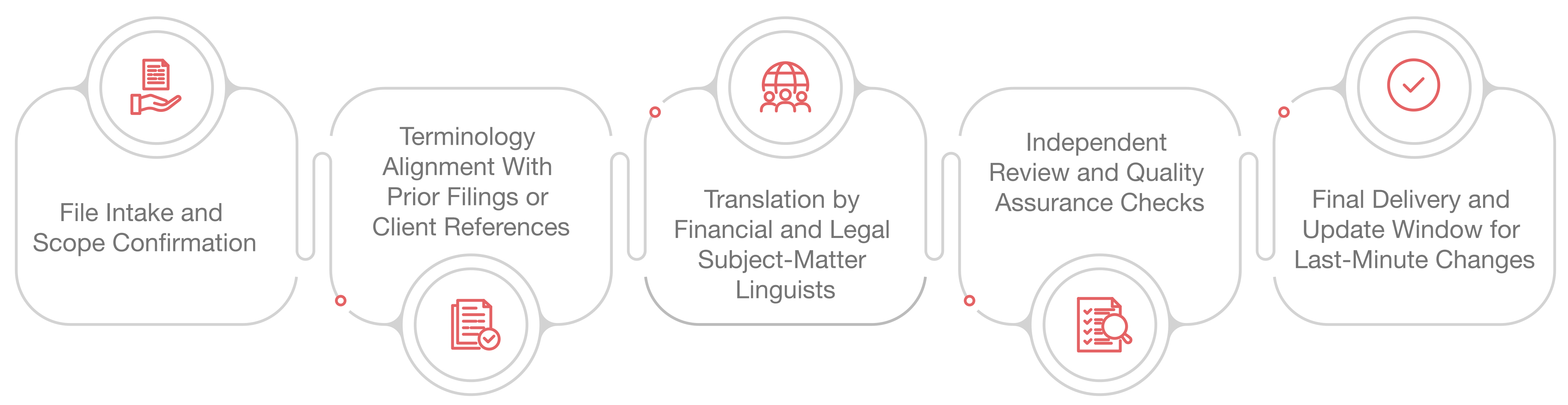
The process begins with secure file intake and a detailed review of the materials to be translated. We confirm document types, filing forms, timelines, and formatting requirements, and identify any time-sensitive sections or updates. This step establishes a clear scope and delivery plan aligned with SEC filing deadlines.
Before translation begins, key terminology is reviewed and aligned with prior SEC filings or approved client references. This includes company names, product names, defined terms, financial terminology, and recurring disclosures. Terminology alignment helps maintain consistency across sections and across reporting cycles, reducing the risk of inconsistencies in regulatory review.
Translations are performed by linguists with experience in financial reporting and legal disclosures. Content is translated with close attention to meaning, structure, and regulatory readability, covering narrative sections, tables, and footnotes. Numeric data, defined terms, and risk-related language are handled carefully to preserve accuracy and intent.
Each translation undergoes an independent review to verify accuracy, consistency, and completeness. Quality checks include terminology validation, numeric and table verification, and cross-reference checks. This step helps identify and resolve issues before delivery, supporting confidence in the final filing content.
Translated files are delivered in a format aligned with the original documents and filing requirements. A final update window is provided to accommodate last-minute changes or amendments, which are common in SEC filing workflows. This approach supports efficient handling of updates while maintaining consistency with previously translated content.

Accuracy Standards for SEC Filing Translations
Accuracy is the foundation of SEC filing translation. Because these documents are reviewed by regulators, auditors, legal counsel, and investors, even small inconsistencies can create regulatory or reputational risk. Our SEC filing translation services are built around strict accuracy standards designed specifically for financial and disclosure-heavy content.
Translations are handled by linguists with financial and legal subject-matter expertise who are familiar with SEC disclosure conventions. This background is essential for accurately conveying complex concepts such as financial performance, governance structures, regulatory risks, and transaction details. Content is translated with close attention to meaning, structure, and regulatory readability, rather than word-for-word substitution.
Defined terms and recurring disclosures are handled consistently throughout the filing. Company names, product names, accounting terms, and legally defined phrases are aligned across sections and, where applicable, with prior filings. This consistency supports regulatory review and reduces the risk of confusion or misinterpretation.
Numeric accuracy is treated as a critical control point. Tables, figures, percentages, currencies, dates, and footnotes are checked carefully to ensure the translated content matches the source exactly. Cross-references within the document are also reviewed to confirm alignment between narrative text and supporting data.
Risk-related language receives particular attention. Forward-looking statements, risk factors, and cautionary disclosures are translated to preserve their original intent and tone. This careful handling helps ensure that risk disclosures remain clear, balanced, and consistent with the source filing.
Certain sections of SEC filings carry higher regulatory and legal sensitivity and require additional review during translation. These include:
- Management’s Discussion and Analysis (MD&A), where financial performance and outlook are explained
- Risk factors that describe material business, financial, and operational risks
- Notes to financial statements, including accounting policies and detailed explanations
- Related-party transactions and disclosures involving affiliates or key stakeholders
- Legal proceedings and regulatory matters
- Disclosure controls and procedures related to reporting and compliance
By applying enhanced scrutiny to these high-risk sections, SEC filing translation services help reduce compliance risk while supporting clear, accurate regulatory communication.
SEC Filing Translation Checklist
Before an SEC filing is submitted, translated content should be reviewed carefully to confirm accuracy, consistency, and readiness for regulatory review. This pre-submission checklist highlights the key areas addressed during SEC filing translation to help reduce compliance risk and support a smooth filing process.
All defined terms, acronyms, and abbreviations are used consistently across narrative sections, tables, footnotes, and exhibits. This includes alignment with prior filings where applicable to avoid discrepancies during regulatory review.
Legal entity names, product names, trademarks, and subsidiary references are checked against source documents and prior disclosures to ensure accuracy and consistency across the filing.
Financial figures, percentages, dates, currencies, and measurement units are reviewed carefully to confirm they match the source content exactly. This step is critical for tables, financial statements, and footnotes.
Risk factors and forward-looking disclosures are reviewed to confirm that the translated language preserves the original intent, scope, and tone of the source text without introducing ambiguity or unintended interpretation.
Tables and footnotes are checked for completeness and alignment with referenced sections. Internal cross-references are reviewed to ensure they point to the correct sections, figures, and notes in the translated filing.
A final bilingual review is conducted for high-risk sections such as MD&A, risk factors, and financial statement notes to confirm overall accuracy and readiness for submission.
This checklist reflects best practices for SEC filing translation and helps ensure that translated filings are complete, consistent, and prepared for regulatory and stakeholder review.
Formatting and SEC-Ready Deliverables
Stepes delivers SEC-ready translation outputs designed for regulatory review and submission. In addition to linguistic accuracy, translated SEC filings must follow the original document structure so legal, finance, and compliance teams can review and finalize them efficiently. Translations align closely with the source layout, including headings, section order, tables, footnotes, and numbering, helping reduce formatting issues during the filing process.
Stepes supports source files in Word, Excel, and PDF formats, allowing translated content to integrate smoothly into existing SEC filing workflows. Deliverables are prepared as clear, submission-ready English documents, suitable for review by auditors, legal counsel, and internal stakeholders before filing with the SEC.
What You Receive
SEC filing translation deliverables are tailored to the needs of each filing and may include:
English translations delivered in Word, Excel, or PDF formats that mirror the structure of the original documents.
Side-by-side or reference versions that support internal review, legal checks, or auditor verification.
A terminology list capturing key defined terms and recurring disclosures used in the filing, supporting consistency across related documents or future filings.
Versions that highlight translated changes for amended filings or updates, helping teams identify revisions quickly and manage regulatory review efficiently.
These deliverables reflect Stepes’ focus on accuracy, consistency, and practical readiness for SEC filing workflows.
Translations for Updates, Amendments, and Exhibit Changes
SEC filing translation often continues beyond the initial submission. Updates, amendments, and revised exhibits are common as filings are finalized, reviewed, or supplemented, and these changes frequently occur under tight timelines. Translation support for these scenarios is designed to be precise, efficient, and aligned with previously filed content.
Where applicable, updated or amended sections are translated without reworking unaffected content. This targeted approach helps reduce turnaround time while preserving consistency with the original filing. Previously approved terminology and disclosure language are reused so that amended filings remain aligned with earlier submissions and regulatory expectations.
Fast turnaround is especially important for last-mile changes, such as updates to financial figures, revised risk language, or newly added exhibits. SEC filing translation services are structured to accommodate these time-sensitive updates while maintaining accuracy across narrative text, tables, and footnotes.
Support extends to amended filings and revised exhibits, including supplemental disclosures, updated financial statements, and corrected or replacement documents. By maintaining continuity between original filings and subsequent updates, translation services help support efficient review and timely submission during the amendment process.
Support for Recurring SEC Reporting Cycles
Many public companies and foreign private issuers file with the SEC on a recurring basis. Annual reports, periodic disclosures, and event-driven updates often follow established language patterns and disclosure structures. SEC filing translation services are designed to support these recurring reporting cycles by maintaining consistency and efficiency over time.
Consistency across annual and periodic filings is a key focus. Approved terminology, defined terms, and standard disclosure language are reused where appropriate so that filings remain aligned from one reporting period to the next. This approach helps reduce discrepancies between filings and supports smoother review by regulators, auditors, and legal teams.
Recurring SEC filings also benefit from more efficient handling of updates. As filing patterns and preferred wording are established, updates to financial results, risk disclosures, or governance sections can be translated more quickly without reworking unchanged content. This efficiency is especially valuable for annual Form 20-F updates and ongoing Form 6-K disclosures.
Over time, familiarity with a company’s disclosure style and reporting structure can lead to reduced turnaround times and more predictable delivery schedules. SEC filing translation services that support recurring reporting cycles help organizations manage ongoing compliance requirements while maintaining accuracy and consistency across filings.
Confidentiality and Data Security
Stepes treats confidentiality and data security as core requirements of SEC filing translation. SEC filings often contain non-public, market-sensitive, and legally confidential information. For this reason, confidentiality and data security are core requirements of SEC filing translation services and a critical consideration for issuers, legal teams, and compliance professionals.
Secure file transfer and storage practices are used throughout the translation process to protect sensitive documents. Files are handled in controlled environments designed to reduce unauthorized access and limit exposure during intake, translation, review, and delivery.
Access to SEC filing materials is restricted to assigned linguists and reviewers who are selected based on subject-matter experience and confidentiality requirements. Limiting access helps maintain control over sensitive disclosures and reduces risk during the translation lifecycle.
SEC filing translation workflows are NDA-ready and structured to support contractual confidentiality obligations. Non-disclosure agreements can be put in place as required, and project handling procedures are designed to align with internal compliance and legal standards.
Special care is taken when handling non-public and sensitive information, including financial results, transaction details, risk disclosures, and forward-looking statements. These controls help support regulatory compliance while giving issuers confidence that their SEC filing materials are managed securely from start to finish.
Languages Supported for SEC Filings
SEC filing translation services support the conversion of financial and legal disclosures from major global languages into clear, accurate English for submission to the US Securities and Exchange Commission. These services are designed for non-US issuers that are required to file English-language disclosures when accessing US capital markets.
Translations are commonly performed from widely used business and reporting languages, including Chinese, Japanese, Korean, French, German, Spanish, Portuguese, and Italian. These languages are frequently associated with foreign private issuers filing annual reports, periodic disclosures, and registration statements with the SEC.
Additional source languages are supported upon request. Language support is assessed based on the specific filing requirements, document complexity, and timeline, allowing issuers with diverse global operations to meet SEC filing obligations while maintaining accuracy and consistency across translated disclosures.
Frequently Asked Questions
Yes. Stepes’ SEC filing translation services are focused on translating financial and legal disclosures into English for submission to the U.S. Securities and Exchange Commission. These services are primarily used by non-US issuers that are required to file English-language disclosures when accessing US capital markets.
Common SEC forms that require translation include Form 20-F for annual reporting by foreign private issuers, Form 6-K for ongoing disclosures, and registration statements such as Forms F-1, F-3, and F-4. Supporting exhibits, financial statements, auditor reports, and legal opinions may also require translation as part of the filing.
Numeric accuracy is a core control in SEC filing translation. Financial figures, tables, percentages, currencies, dates, and footnotes are reviewed carefully against the source content. Cross-references between narrative sections and financial statements are also checked to confirm consistency throughout the filing.
Yes. SEC filings often involve tight deadlines and last-minute updates. Translation workflows are structured to support urgent requests, including fast turnaround for updates, amendments, and revised exhibits, while maintaining accuracy and consistency with previously filed content.
Yes. Translations can be aligned with previously filed SEC disclosures to maintain consistent terminology, defined terms, and recurring language across reporting cycles. This approach helps reduce discrepancies between filings and supports smoother regulatory and legal review.
SEC filings require a high level of accuracy and careful handling of financial and legal language. Translation approaches are selected based on document type, risk level, and client requirements, with appropriate human oversight applied to support regulatory accuracy and review expectations.
Confidentiality and data security are treated as core requirements. Secure file transfer and storage are used throughout the translation process, access is restricted to authorized personnel, and NDA-ready workflows are available. These measures help protect non-public and sensitive financial information from intake through final delivery.

Why Stepes for SEC Filing Translation Services
Stepes supports public companies and foreign private issuers with SEC filing translation services built around accuracy, consistency, and regulatory readiness. Our approach is designed to meet the practical needs of legal, finance, and compliance teams managing high-stakes US filings.
Stepes has deep experience translating financial and disclosure-heavy content, including annual reports, periodic disclosures, and registration statements. These materials require careful handling of financial data, defined terms, and risk-related language, as well as close alignment across narrative sections, tables, and footnotes. Our workflows are structured to support this level of complexity and review.
Our SEC filing translation services are tightly focused on US-market filing requirements. Translations are prepared specifically for English-language submission to the U.S. Securities and Exchange Commission, with attention to clarity, consistency, and readability for regulators, auditors, investors, and legal counsel.
Reliable delivery under regulatory deadlines is a core consideration. SEC filings often involve fixed timelines, last-minute changes, and amendment cycles. Stepes supports these demands with structured workflows that accommodate urgent updates while maintaining accuracy and consistency with previously filed content.
Stepes also provides scalable support for both one-time filings and recurring reporting cycles. Whether supporting a first-time SEC filing, an annual Form 20-F, or ongoing Form 6-K disclosures, our services are designed to scale with filing volume and frequency while maintaining consistent quality across reporting periods.

Related Services
In addition to SEC filing translation services, Stepes offers a range of financial translation solutions that support broader reporting, disclosure, and compliance needs. These services are designed to complement SEC-focused work while addressing different regulatory scopes and use cases.
Translation support for financial disclosures and regulatory reporting across multiple jurisdictions and supervisory authorities. These services are designed for organizations operating under non-US or multi-regional regulatory frameworks.
For broader, multi-jurisdiction financial compliance needs, see our Regulatory Financial Translation Services.
Accurate translation of balance sheets, income statements, cash flow statements, and related notes, supporting audits, regulatory submissions, and investor communications.
Translation of annual reports and shareholder communications, including narrative disclosures and financial content, aligned for consistency and clarity across reporting materials.
For a comprehensive overview of Stepes’ financial language solutions, see our Financial Translation Services, which cover a wide range of financial, regulatory, and disclosure-driven translation needs.
SEC Filing Translation for Deadline-Driven Teams
Accurate, confidential translations designed for US regulatory review and SEC filing timelines.