Translation Across the Global Supply Chain
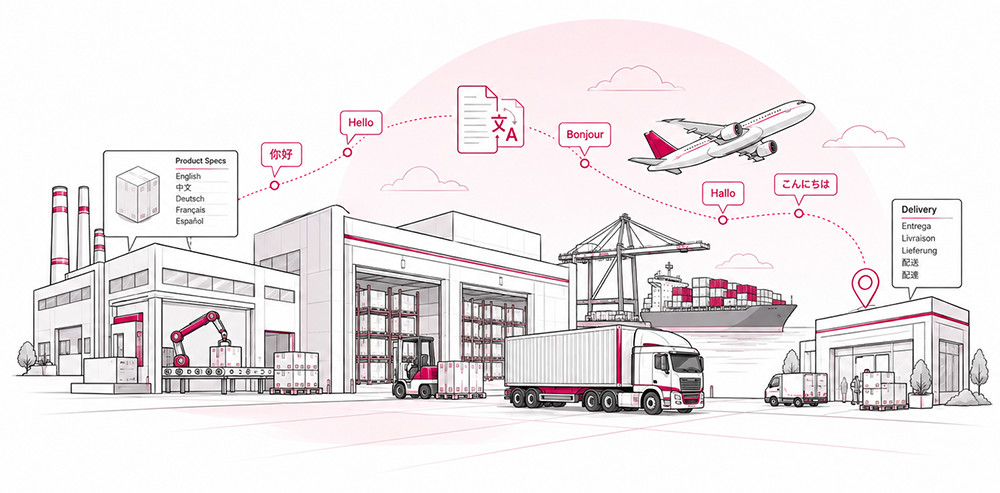
A global supply chain is not just the physical movement of materials and finished products. It is also a continuous flow of specifications, instructions, orders, quality requirements, software data, training content, shipping information, and business communications.
Sourcing
RFPs, RFQs, specifications, purchasing requirements
Suppliers
Onboarding, quality requirements, agreements, communications
Manufacturing
Work instructions, SOPs, technical and quality documentation
Inventory
Warehouse procedures, inventory systems, labels, training
Logistics
Shipping, freight, customs and distribution communications
Distribution
Regional operations, fulfillment and downstream content
From the first sourcing request to final distribution, Stepes helps keep business-critical information understandable and consistent across the global supply chain.
Global Sourcing and Supplier Translation
Modern companies increasingly diversify sourcing and production across regions while working with suppliers, contract manufacturers, technology providers, logistics partners, and other vendors across multiple countries. Effective sourcing depends on all parties understanding the same technical requirements, commercial expectations, quality standards, and operating instructions.
For procurement organizations evaluating, sourcing, and governing enterprise translation services, Stepes also provides dedicated procurement-team solutions.
Translation Solutions for Procurement TeamsSourcing and Procurement Documents
Translate requests for proposal, requests for quotation, tender documents, statements of work, technical specifications, purchasing requirements, supplier questionnaires, pricing documentation, and related sourcing content.
Supplier Onboarding and Qualification
Give international suppliers clear access to onboarding instructions, quality requirements, compliance materials, supplier manuals, codes of conduct, audit documentation, qualification questionnaires, and operating procedures.
Supplier Communications
Translate supplier notifications, production changes, corrective-action communications, technical questions, engineering updates, quality notices, portal content, and other recurring information required to maintain global supplier relationships.
Multilingual Manufacturing and Supplier Operations
Once sourcing moves into production, multilingual communication becomes increasingly technical. Components, processes, materials, equipment, quality standards, safety requirements, and manufacturing instructions must remain aligned between engineering teams, plants, suppliers, and contract manufacturers.
Production Documentation
Work instructions, standard operating procedures, process documentation, assembly instructions, production requirements, and operational communications.
Engineering and Technical Content
Engineering specifications, equipment documentation, component information, material specifications, technical change notices, and product requirements.
Quality and Inspection Content
Supplier quality manuals, inspection instructions, audit materials, testing documentation, quality procedures, and corrective-action content.
Safety and Workforce Materials
Safety instructions, warnings, operating procedures, employee training, and workplace communications for multilingual production environments.
Inventory, Warehousing, and Logistics Translation
Materials and products continue generating multilingual information after they leave the production line. Inventory control, warehousing, freight, customs, transportation, and distribution processes all depend on accurate communications between employees, carriers, logistics providers, customs specialists, regional operations, and customers.
Stepes translates warehouse and logistics content including inventory procedures, receiving instructions, picking and packing processes, warehouse training, shipping documentation, freight communications, customs-related content, delivery instructions, distribution documentation, and logistics software.
Supply Chain Software and Digital Systems Localization
Today’s supply chains depend on interconnected digital systems that coordinate suppliers, inventory, production, transportation, orders, analytics, and fulfillment. Stepes localizes supply chain software and digital experiences across web, desktop, cloud, mobile, and enterprise environments.
Explore Software Localization ServicesSupply Chain Documents We Translate
Supply chain translation can involve hundreds of content types generated by different teams, systems, suppliers, and operating locations. Stepes provides one coordinated solution for multilingual content across the supply chain.
Sourcing & Supplier
RFPs and RFQs, bid packages, supplier agreements, vendor questionnaires, onboarding materials, audit documentation, purchase requirements, and supplier manuals.
Manufacturing & Technical
Engineering specifications, SOPs, work instructions, technical manuals, equipment documentation, process content, quality procedures, and test instructions.
Warehouse & Inventory
Receiving procedures, inventory instructions, storage requirements, warehouse SOPs, fulfillment instructions, operational training, and inventory-system content.
Logistics & Distribution
Shipping documents, freight communications, customs-related documentation, delivery instructions, carrier information, and distribution procedures.
Software & Digital
SCM, WMS, TMS, ERP, supplier portal, procurement application, dashboard, mobile application, help-center, and user-interface content.
Training & Workforce
Supplier training, manufacturing training, warehouse training, onboarding, safety content, eLearning, presentations, videos, and workforce communications.
Whether the requirement is a single supplier document or an ongoing global program spanning thousands of content assets, Stepes can configure the appropriate translation and quality workflow.
Consistent Terminology Across Global Supply Chains
A single technical term may appear in a supplier specification, ERP platform, engineering document, manufacturing instruction, quality procedure, warehouse system, shipping record, training module, or service manual. If each asset is translated independently, terminology can gradually diverge.
Stepes helps establish a shared multilingual language foundation through centralized terminology management and translation memory.
Terminology Management
Define preferred translations for product names, components, materials, manufacturing processes, quality terms, abbreviations, technical concepts, and organization-specific vocabulary. Approved terminology can guide AI systems, professional linguists, reviewers, and quality checks.
Explore Terminology ManagementTranslation Memory
Capture previously translated and approved content so recurring or similar material can be identified and reused appropriately. Translation memory helps reduce unnecessary retranslation while improving consistency across document revisions, products, suppliers, systems, and recurring programs.
Explore Translation MemoryAI-Powered Supply Chain Translation with Human Expertise
Supply chain content varies widely in purpose and risk. A routine supplier notification, high-volume system update, technical manufacturing instruction, commercial agreement, and safety procedure should not automatically follow the same translation workflow.
The objective is not to choose AI instead of people or people instead of AI. It is to apply the right combination of technology, professional expertise, language assets, review, and quality controls to each content stream.
High-Volume and Frequently Updated Content
AI-assisted translation, translation memory, terminology controls, workflow automation, and targeted professional review can help process recurring operational content efficiently.
Technical and Specialized Content
Professional linguists with appropriate subject-matter expertise can review technical terminology, manufacturing processes, software context, quality requirements, and specialized documentation.
Business-Critical Content
Safety, legal, quality, regulatory, or other high-impact information can receive additional professional review and quality assurance based on customer requirements and intended use.
Translation That Keeps Pace with Supply Chain Change
Supply chains rarely remain static. Organizations introduce new suppliers, move production, update specifications, launch products, revise operating procedures, deploy software releases, open distribution locations, and respond to changing market requirements.
Stepes supports continuous translation workflows that help identify new and modified content, reuse approved translations where appropriate, apply established terminology, translate new material, complete required review, and preserve final approvals for future updates.
Explore Continuous TranslationA Scalable Workflow for Global Supply Chain Content
Every supply chain translation program has different content, technologies, languages, stakeholders, and quality requirements. Stepes configures the workflow around the actual business need rather than forcing all content through one process.
Analyze
Review content, languages, subject matter, formats, intended use, update frequency, terminology, existing TM, deadlines, and quality requirements.
Prepare
Identify translatable content, protect non-translatable elements, prepare files, and apply approved terminology and language assets.
Select
Choose the appropriate professional human, AI-assisted, hybrid, post-editing, review, and quality process.
Translate
Localize documents, software, training, operational content, structured data, and related assets while preserving context.
Review
Apply professional linguistic or subject-matter review where appropriate and incorporate established customer requirements.
QA
Check completeness, terminology, numbers, consistency, protected elements, formatting, and agreed technical requirements.
Deliver & Reuse
Return finalized content in the required format and preserve approved translations, terminology, and feedback for future work.
Supply Chain Translation Across Global Industries
Supply chains vary significantly by industry. Technical terminology, regulatory requirements, product complexity, operating environments, software systems, and documentation needs all influence how multilingual content should be handled.
Industrial Manufacturing
Connect engineering, suppliers, plants, quality teams, service operations, and distributors through consistent technical language.
Automotive & Mobility
Support complex supplier networks, component manufacturing, production operations, quality systems, software, service information, and distribution.
Medical Devices & Life Sciences
Coordinate technical, quality, supplier, manufacturing, logistics, training, and regulated product content with controlled terminology.
Electronics & Technology
Translate fast-changing product specifications, supplier documentation, software, manufacturing content, quality information, and launch materials.
Retail & eCommerce
Support product sourcing, supplier information, inventory, fulfillment, logistics, marketplace content, and international distribution.
Food & Beverage
Translate supplier specifications, quality documentation, manufacturing information, labels, packaging, safety content, and distribution materials.
Supply Chain Translation in 100+ Languages
Global supply networks can connect a product designed in one country with components sourced in several others, manufacturing in another region, logistics providers across multiple markets, and customers worldwide.
Stepes supports major manufacturing, sourcing, logistics, technology, and commercial markets across Europe, Asia, the Americas, the Middle East, and Africa, including Spanish, French, German, Italian, Portuguese, Chinese, Japanese, Korean, Vietnamese, Thai, Indonesian, Polish, Czech, Dutch, Swedish, Turkish, Arabic, and many more.
Built for Complex, Multilingual Supply Chains
Global supply-chain translation requires more than access to translators. Organizations need a process that can connect language expertise, technical content, recurring updates, digital systems, quality requirements, and reusable linguistic knowledge.
Specialized Linguistic Expertise
Match content with professional translators and reviewers who understand relevant technical, manufacturing, software, logistics, commercial, and operational terminology.
AI + Human Workflows
Use translation technology and professional expertise according to content volume, complexity, audience, purpose, and business risk.
Enterprise Terminology Control
Maintain approved terminology across suppliers, departments, documents, software systems, languages, and markets.
Reusable Translation Memory
Preserve approved bilingual content so revisions and recurring materials can build on previous work rather than starting again.
Technical File Support
Translate common business documents, spreadsheets, presentations, PDFs, structured content, software resources, training assets, and other enterprise formats.
Quality-Focused Processes
Combine translation, professional review, terminology controls, automated checks, and final QA according to project requirements.
Supply Chain Translation FAQs
Answers to common questions about multilingual supply chain documents, software, terminology, workflows, and enterprise programs.
Supply chain translation services translate and localize the documents, software, training, communications, and operational content used across global sourcing, supplier management, manufacturing, inventory, warehousing, logistics, transportation, and distribution. The goal is to help companies exchange accurate multilingual information across the organizations, systems, and locations involved in moving products from sourcing and production through delivery.
Supply chain translation has a broader scope. It can cover the complete lifecycle from sourcing and suppliers through manufacturing, inventory, logistics, and distribution. Logistics translation focuses more specifically on the movement and storage of goods, including freight, shipping, warehousing, customs, transportation, carrier communications, and distribution.
Explore Logistics Translation ServicesStepes translates sourcing documents, RFPs, RFQs, supplier specifications, onboarding materials, quality documentation, audit materials, engineering specifications, SOPs, work instructions, warehouse procedures, inventory content, shipping documents, logistics materials, training content, software documentation, and other supply-chain-related information.
Yes. Stepes translates RFPs, RFQs, tender packages, specifications, supplier questionnaires, onboarding materials, supplier manuals, quality requirements, audit documentation, purchasing content, and related sourcing materials. Terminology management can help maintain consistent language across a complete procurement or supplier documentation package.
Yes. Stepes localizes supply chain management systems, warehouse management systems, transportation management systems, supplier portals, sourcing applications, ERP modules, dashboards, mobile applications, user interfaces, help content, and related software documentation.
Explore Software Localization ServicesStepes can centralize approved terminology for products, components, materials, processes, quality concepts, abbreviations, and specialized technical language in a multilingual termbase. Translation memory stores previously approved bilingual content for future reuse. Together, these language assets help AI systems, linguists, reviewers, and quality processes apply established language more consistently across documents, software, teams, and projects.
Yes. Supply chain documentation and digital content often change continuously as suppliers, products, systems, specifications, locations, and operating requirements evolve. Stepes can establish recurring or continuous translation workflows that identify new and modified content, apply existing terminology and translation memory, translate changes, complete required review, and preserve final approvals for future updates.
The appropriate workflow depends on factors such as content purpose, audience, complexity, subject matter, confidentiality, volume, turnaround requirements, and consequences of error. Stepes configures the workflow according to the requirements of each content stream rather than applying one translation method to everything.
Stepes supports more than 100 languages across major global sourcing, manufacturing, technology, logistics, and commercial markets. Multilingual programs can include European, Asian, Latin American, Middle Eastern, African, and other regional languages within one coordinated workflow.
Yes. Stepes can support both individual translation projects and recurring multilingual programs spanning multiple departments, content types, suppliers, languages, systems, and markets. Enterprise programs can incorporate translation memory, terminology management, workflow automation, professional review, quality assurance, and reusable project requirements.
Keep Your Global Supply Chain Moving in Every Language
Connect suppliers, manufacturing operations, digital systems, logistics partners, distributors, and global teams with accurate multilingual content. From a single RFP or supplier specification to an enterprise-wide program, Stepes provides scalable supply chain translation services in more than 100 languages.