
Technical Manual Translation Services
Translate operating, installation, maintenance, service, and equipment manuals with the technical precision global manufacturers need for safe operation, reliable maintenance, and consistent product support.
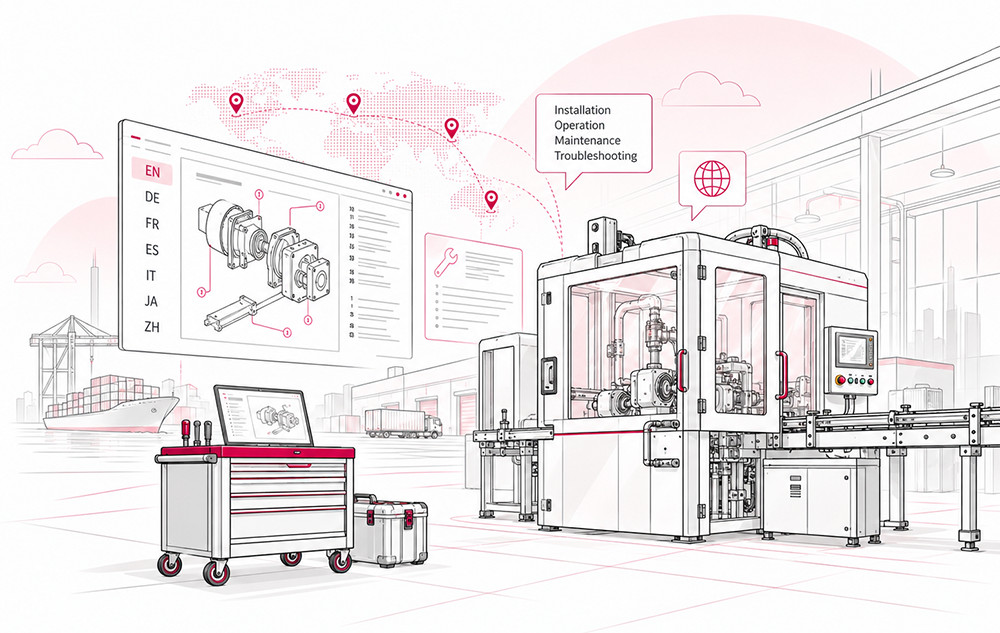
Technical Manuals Built for Accurate Work Across Languages
Technical manuals do more than explain a product. They guide the people responsible for installing, commissioning, operating, maintaining, troubleshooting, and servicing complex equipment.
Stepes provides professional technical manual translation services for manufacturers and engineering organizations that need technically accurate documentation across global markets. We combine experienced technical linguists, AI-enabled translation technology, terminology management, translation memory, automated quality controls, and multilingual publishing to help preserve technical meaning from source to target language.
Whether you are launching a new machine internationally, adding languages to an established product family, or updating documentation after an engineering change, Stepes helps keep multilingual technical content accurate, consistent, and ready for use.
From a single operating manual to documentation programs spanning multiple equipment models, revisions, and languages, our workflows are built for the realities of global manufacturing.
Manufacturing Translation ServicesTechnical Documentation From Installation Through Service
Complex equipment generates documentation throughout its operating life. Stepes translates the technical information teams rely on at every stage, helping manufacturers maintain consistent instructions from installation through future upgrades.
Install
Site preparation, mechanical assembly, mounting requirements, electrical and utility connections, installation specifications, and equipment setup documentation.
Commission
Startup procedures, initial configuration, calibration instructions, functional tests, parameter settings, and commissioning documentation before equipment enters service.
Operate
Operating and operator manuals covering controls, operating sequences, settings, limits, normal procedures, shutdown procedures, and day-to-day equipment use.
Maintain
Preventive and corrective maintenance instructions, inspection procedures, lubrication requirements, calibration schedules, replacement intervals, and equipment-care procedures.
Troubleshoot
Fault codes, diagnostic procedures, alarm descriptions, decision trees, corrective actions, and step-by-step troubleshooting instructions.
Service
Repair procedures, field-service documentation, component replacement instructions, disassembly and reassembly, testing, and return-to-service information.
Upgrade
Product revisions, replacement components, firmware changes, retrofits, new configurations, and updated service procedures.
Technical Manual Translation for Complex Equipment and Systems
Stepes translates the technical manuals manufacturers use to support equipment throughout its operational lifecycle.
Operating Manuals
Translate the procedures, parameters, controls, operating limits, and safety information required to run industrial equipment correctly and efficiently.
Operator Manuals
Provide machine operators, production personnel, control-room teams, and other technical users with clear multilingual instructions tailored to their operating responsibilities.
Installation & Assembly Manuals
Localize site preparation, assembly sequences, mounting, utility connections, configuration, testing, and installation requirements for global deployment.
Maintenance Manuals
Translate preventive maintenance schedules, inspection procedures, adjustment instructions, calibration requirements, wear-part replacement, and corrective maintenance processes.
Service & Repair Manuals
Support field technicians and service organizations with accurate diagnosis, disassembly, repair, component replacement, testing, and reassembly instructions.
Troubleshooting Manuals
Translate diagnostic workflows, fault codes, alarm conditions, probable causes, corrective actions, and other information needed to identify and resolve equipment problems.
Equipment Safety Instructions
Maintain the meaning of warnings, cautions, hazard information, operating restrictions, protective measures, residual-risk information, and other safety-related instructions.
Field-Service Documentation
Localize service bulletins, technical updates, retrofit instructions, repair procedures, technician documentation, and other content used to support installed equipment.
Parts & Component Documentation
Keep component names, part descriptions, assemblies, subassemblies, callouts, and related terminology consistent across manuals, drawings, and service documentation.
Translate the Meaning Behind the Engineering
Technical translation requires more than fluent language. A manual may contain thousands of interconnected details whose meaning must remain consistent throughout the document and across related product materials.
A technically fluent sentence is not enough if a translated component name no longer matches a drawing, an operating parameter becomes ambiguous, or a maintenance instruction points technicians to the wrong part.
Our goal is to preserve the relationship between the language, the procedure, and the equipment itself.
That means treating terminology, numbers, graphics, procedural logic, and document structure as connected elements of the same technical information system.
AI-Powered Technical Translation With Human Validation
Modern AI can accelerate technical translation, especially for repetitive or previously translated content. Human validation remains especially important for safety warnings, ambiguous technical language, complex maintenance sequences, component relationships, numerical specifications, and specialized terminology. Stepes combines AI-enabled translation with professional technical review and automated QA so manufacturers can increase speed without treating every sentence as if it carries the same level of risk.
Analyze the Content
Evaluate source files, document structure, language combinations, repetition, existing translations, terminology, formatting requirements, and technical complexity.
Prepare Terminology
Incorporate existing glossaries, approved translations, product terminology, component names, and customer preferences into the multilingual workflow.
Translate Efficiently
Apply translation memory, AI-assisted translation, and professional human translation according to content, project requirements, and the appropriate level of linguistic control.
Validate Technical Meaning
Experienced linguists review terminology, instructions, technical context, procedural meaning, and language quality with suitable subject-matter expertise.
Perform Automated QA
Use automated checks to identify terminology inconsistencies, missing text, numerical discrepancies, tag issues, formatting problems, and other potential errors.
Publish and Verify
Return translated content in the required structured, editable, digital, or publication-ready format with final checks for language completeness and document integrity.
Keep Equipment Terminology Consistent Across Every Language
Industrial products can contain hundreds or thousands of named components, assemblies, controls, functions, and procedures. If those terms change from one manual to another, technicians can be left interpreting whether different translations refer to the same part or operation.
Stepes helps manufacturers establish and maintain multilingual terminology across entire technical content ecosystems. Terminology databases can include definitions, context, approved alternatives, prohibited terms, product-specific usage, and language-specific guidance.
For global manufacturers, terminology consistency supports clearer instructions, faster review, more efficient service, and stronger technical content governance across the product lifecycle.
Terminology ManagementLocalize Engineering Changes Without Starting Over
Technical manuals evolve with the products they describe. A single equipment family may generate multiple models, configurations, software versions, component substitutions, safety updates, and engineering revisions. Stepes uses translation memory and content-reuse technologies to identify what has already been translated and what has changed.
Preserve Approved Content
Reuse previously translated and validated content instead of translating it again.
Isolate New and Changed Text
Focus translation and review on revised procedures, components, warnings, specifications, and other updates.
Protect Terminology
Keep approved product and engineering terminology available across revisions and related manuals.
Accelerate Release Cycles
Reduce effort for multilingual releases by concentrating work on meaningful content changes.
Improve Lifecycle Consistency
Keep new revisions aligned with earlier manuals, product terminology, and established translations.
Reduce Redundant Translation
Avoid repeatedly translating identical technical content across product models and document revisions.
Work Directly With the Files Technical Teams Already Use
Technical documentation is increasingly created as structured, reusable content rather than as a single static document.
Stepes supports multilingual workflows across common technical authoring, publishing, and content-management environments so manufacturers can localize source content while preserving the structure needed for future revisions.
By working with underlying content whenever possible, Stepes helps preserve document intelligence instead of treating every final publication as a flat collection of words. This becomes increasingly valuable as manufacturers move toward modular documentation, single-source publishing, automated content delivery, and faster global product updates.
Structured Authoring
Translate XML, DITA, and other structured technical content while protecting tags, variables, metadata, reusable topics, conditional content, and document relationships.
Technical Publishing
Support documentation authored in Adobe FrameMaker, Adobe InDesign, Microsoft Word, and other professional technical publishing environments.
CMS & CCMS Workflows
Work with component-based content exported from content management and component content management systems so reusable technical topics remain reusable after translation.
PDF & Legacy Documentation
Support translation and multilingual recreation workflows when editable source files are unavailable.
Digital Technical Content
Translate HTML, help content, structured data, and other formats used to deliver technical information electronically.
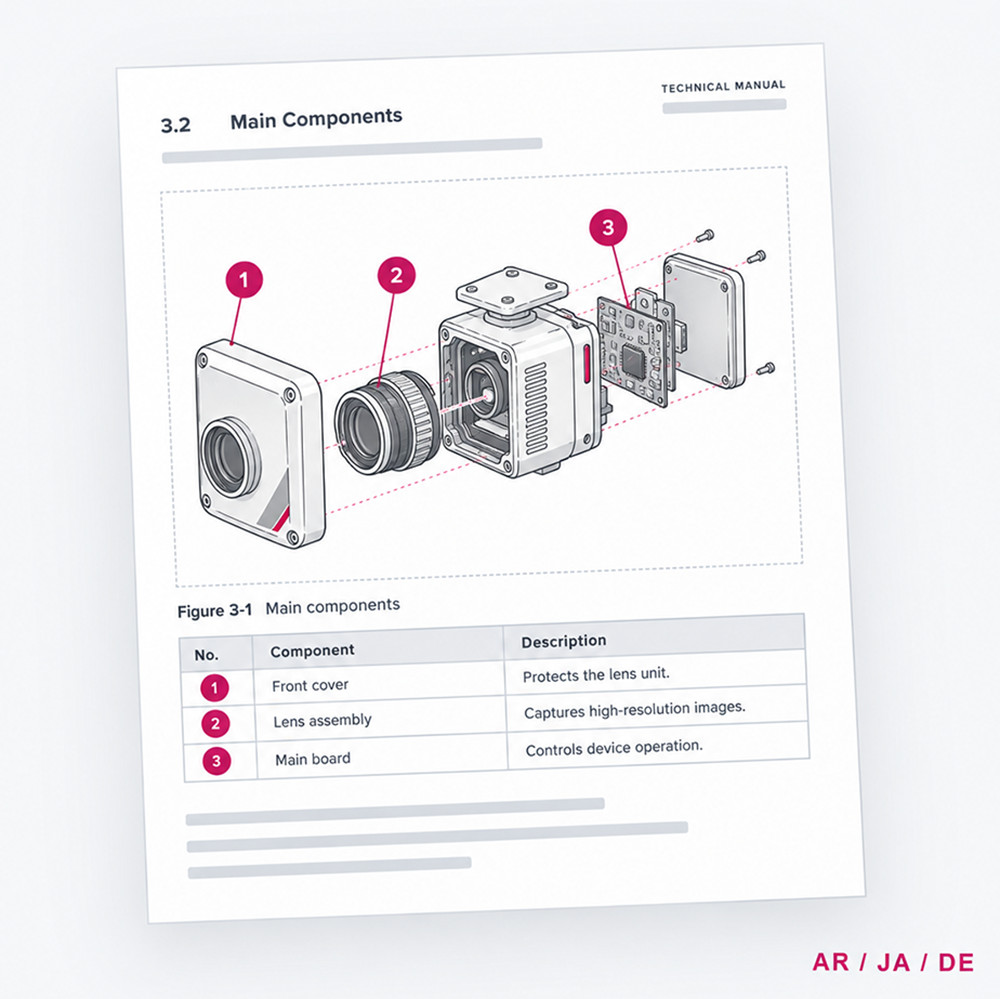
Preserve the Connection Between Words and Technical Visuals
Technical manuals communicate through more than paragraphs. Diagrams, numbered callouts, tables, flowcharts, screenshots, symbols, captions, labels, and cross-references frequently carry information that is just as important as the surrounding text.
Stepes provides multilingual desktop publishing and technical graphics support to keep these elements synchronized after translation. Our teams address text expansion and contraction, CJK typography, right-to-left languages, page reflow, font compatibility, graphical labels, and print-ready output.
A technical manual is not finished simply because its sentences have been translated. Text, graphics, references, navigation, and layout must continue to function together in every target language.
Multilingual Desktop PublishingTranslate Safety-Critical Instructions With Appropriate Controls
Safety-related technical information communicates hazards, limitations, protective measures, and actions intended to help people interact with machinery and equipment appropriately.
Technical documentation may be prepared within frameworks such as ISO 12100, ISO 20607, IEC/IEEE 82079-1, applicable EU machinery requirements, industry-specific standards, and manufacturer-controlled documentation procedures.
Stepes supports manufacturers in translating documentation developed for applicable product, safety, and market requirements while maintaining terminology, warnings, instructions, and document structure across languages.
Translation supports the documentation lifecycle. Regulatory conformity depends on the product, source documentation, market, applicable requirements, and the manufacturer's own conformity process.
For safety-sensitive content, Stepes can apply enhanced review, terminology controls, and quality assurance based on project requirements.
Technical Documentation for Complex Products and Equipment
Different industries use different engineering terminology, documentation structures, and service models. Stepes supports technical manual translation across a wide range of manufacturing and engineering sectors.
Industrial Machinery
CNC equipment, production machinery, processing systems, packaging equipment, material-handling systems, machine tools, and other industrial equipment.
Industrial Automation
PLC-controlled systems, factory automation, control equipment, sensors, actuators, production lines, and integrated automation systems.
Robotics
Industrial robots, collaborative robots, robotic cells, controllers, end-of-arm tooling, programming documentation, maintenance, and service information.
Explore Robotics TranslationAutomotive & Transportation
Manufacturing equipment, vehicle components, technical systems, diagnostics, service documentation, production technologies, and related engineering content.
Explore Automotive TranslationElectronics & Electrical Equipment
Electrical systems, controls, power equipment, instrumentation, electronic assemblies, test systems, and industrial electronics.
Energy & Power Systems
Renewable-energy equipment, energy storage, power-generation systems, electrical infrastructure, industrial energy technologies, and related equipment.
Aerospace & Advanced Manufacturing
Precision systems, complex assemblies, manufacturing technologies, technical procedures, and highly engineered products.
Scientific & Laboratory Equipment
Analytical instruments, test equipment, laboratory systems, measurement technologies, and other technically complex devices.
Translate Technical Manuals for Global Equipment Deployment
Manufacturers increasingly design products in one market, source components from another, manufacture across multiple countries, and install equipment worldwide.
Stepes supports technical manual translation in more than 100 languages, enabling manufacturers to deliver consistent documentation to operators, technicians, distributors, service organizations, and production facilities around the world.
Regional language variants can be supported when documentation must match specific target markets, product releases, or customer requirements.
View All LanguagesTechnical QA Beyond Linguistic Fluency
Technical documentation can contain thousands of details, and not every translation problem appears as an obvious grammatical error. Stepes quality workflows look beyond linguistic fluency to address the elements that affect how technical documentation functions in practice.
Terminology
Verify approved component names, engineering terms, process terminology, and customer-specific vocabulary.
Numbers & Measurements
Check numerical content, units, ranges, decimal conventions, model references, and structured technical information for potential discrepancies.
Procedural Integrity
Review numbered steps, sequences, conditions, and instructions to help keep translated procedures complete and logically organized.
Warnings & Safety Information
Check consistent treatment of safety terminology, warning structures, hazard-related language, and other controlled content.
Cross-References
Verify references to figures, tables, chapters, sections, steps, and other document elements where included in project scope.
Graphics & Callouts
Confirm that translated labels, diagrams, callouts, and captions remain aligned with corresponding text.
Formatting
Identify truncation, overflow, broken layouts, missing fonts, misplaced elements, and publication issues introduced by language expansion.
Completeness
Help identify untranslated, omitted, duplicated, or otherwise inconsistent content before final delivery.
One Partner for Technical Translation and Multilingual Publishing
Global technical documentation involves much more than sending text from one language to another. Stepes brings translation, technology, terminology, content reuse, QA, and publishing together in one scalable workflow.
Technical Subject-Matter Expertise
Professional linguists selected for relevant technical and manufacturing knowledge, language expertise, and project requirements.
AI + Human Workflows
Modern translation technology accelerates appropriate content while professional review and validation support technically demanding material.
Terminology at Scale
Centralize approved terminology across product families, departments, documentation types, and languages.
Translation Memory & Content Reuse
Leverage previously approved translations to improve consistency and reduce redundant work across revisions.
Technical File Engineering
Support structured content, professional authoring environments, technical graphics, and multilingual publishing in one coordinated workflow.
Global Scalability
Manage technical documentation across multiple languages, manuals, product lines, and release cycles through a single translation partner.
Whether you need one maintenance manual translated into five languages or an ongoing multilingual documentation program across hundreds of technical files, Stepes provides the technology and linguistic resources to scale with your requirements.
Different Documentation for Different Product Audiences
Technical manuals and user manuals sometimes describe the same product, but they often serve very different people and purposes.
For the People Who Install, Operate, Maintain, Troubleshoot, and Service the Product
Technical manuals typically support installers, operators, technicians, maintenance teams, service organizations, and engineering personnel working with complex equipment.
For Customers and Product Users
User manuals typically help customers and product users understand how to set up, use, navigate, and get support for a product.
User Manual Translation ServicesBy treating technical documentation according to its actual audience and purpose, manufacturers can apply the right translation, terminology, review, and publishing workflow to each content type.
Technical Manual Translation FAQs
Answers to common questions about technical documentation, terminology, AI workflows, structured files, revisions, safety-sensitive content, language coverage, and pricing.
Stepes translates operating manuals, operator manuals, installation and assembly manuals, commissioning documentation, maintenance manuals, service and repair manuals, troubleshooting guides, equipment safety instructions, field-service documentation, parts information, and other technical publications used throughout the equipment lifecycle. We support documentation ranging from individual manuals to multilingual programs spanning multiple models, product families, revisions, and languages.
Technical manuals typically support installers, operators, technicians, maintenance teams, field-service organizations, engineers, and other personnel who work directly with complex machinery or technical systems. They often focus on installation, operation, maintenance, diagnostics, repair, and equipment safety. User manuals are generally more focused on helping customers or product users set up, understand, and use a product. Stepes provides dedicated services for both documentation types so each can use the appropriate translation and localization workflow.
Yes. Stepes supports technical documentation created in professional authoring and structured-content environments, including Adobe FrameMaker and XML/DITA workflows. We can preserve tags, document structure, variables, reusable content, conditional text, and other technical elements needed for continued multilingual publishing and future revisions.
Yes. Technical manual translation can include diagrams, graphical labels, callouts, tables, charts, captions, screenshots, and other visual elements. Stepes also provides multilingual desktop publishing to help ensure translated graphics and page layouts remain aligned with the surrounding technical content.
Stepes combines terminology management, translation memory, customer-approved glossaries, contextual reference material, and linguistic QA to maintain consistent terminology. Approved component names and technical terms can be reused across operating manuals, service documentation, parts information, HMI content, training materials, and related technical publications.
Yes. Translation memory and content-reuse workflows can identify previously translated material and focus new translation efforts on changed or newly added content. This is particularly valuable for technical manuals because product documentation often evolves through engineering revisions, model updates, component changes, new safety information, and software or firmware releases.
Stepes uses AI-enabled translation technology as part of a broader professional localization workflow. The appropriate approach depends on technical complexity, language combination, content type, risk profile, available translation memory, terminology resources, and customer requirements. AI and automation can accelerate suitable content, while professional technical linguists provide review and validation where human expertise is needed.
Yes. Stepes supports translation of warnings, cautions, hazard information, safety procedures, operating limitations, maintenance precautions, and other safety-related technical content. Projects can include enhanced terminology management, professional review, and QA controls based on the documentation and customer requirements. Responsibility for determining applicable regulatory requirements and final product conformity remains with the manufacturer and its designated compliance professionals.
Stepes supports technical manual translation in more than 100 languages, including major European, Asian, Middle Eastern, and American languages as well as regional language variants. Our global language coverage enables manufacturers to manage multilingual technical documentation through a consistent workflow as products enter new international markets.
Pricing depends on factors such as source word count, target languages, technical complexity, existing translation memory, repetition, terminology requirements, review level, source-file format, graphics, and multilingual desktop publishing needs. Manuals with substantial previously translated or repeated content may benefit from translation-memory leverage and content reuse.
Ready to Translate Your Technical Manuals?
From a single equipment manual to multilingual documentation across product families, revisions, and global markets, Stepes combines technical translation, terminology control, AI-enabled workflows, content reuse, quality assurance, and multilingual publishing in one scalable solution.
Help your operators, technicians, service teams, and global partners work from technical documentation that is clear, consistent, and ready for the equipment they support.