Reach Germany and German-Speaking Markets With Confidence
Germany is Europe’s largest economy and one of the world’s most important markets for advanced manufacturing, medical technology, software, automotive engineering, chemicals, energy, and industrial innovation.
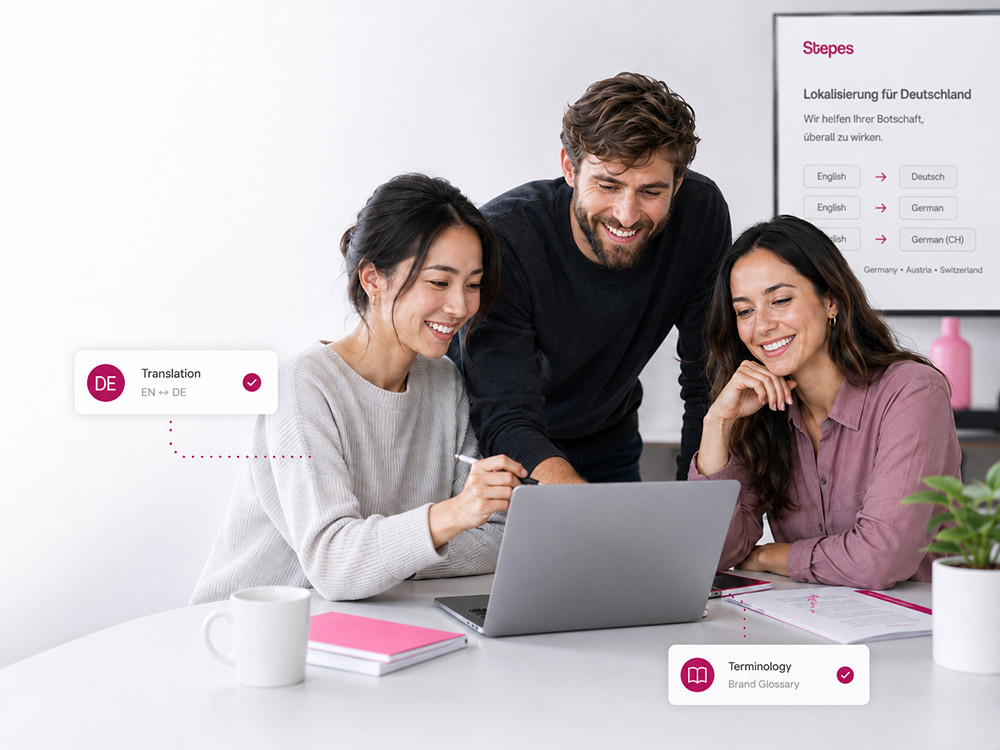
For companies entering Germany, professional translation supports product adoption, regulatory readiness, digital engagement, and long-term customer relationships. For German organizations expanding internationally, accurate German-to-English translation helps transfer technical knowledge and communicate with customers, partners, regulators, and employees worldwide.
German Localization for Germany, Austria, and Switzerland
Written German is widely understood across German-speaking Europe, but terminology, spelling, institutional language, formatting, tone, and customer expectations can vary by market.
German for Germany
The primary locale for most commercial, technical, software, medical, regulatory, and customer-facing programs.
- Technical and manufacturing content
- Software and digital products
- Medical and regulated materials
- Business, legal, and customer communications
Austrian German
Targeted adaptation for Austrian terminology, institutional usage, healthcare, legal language, consumer products, and customer communications.
Stepes helps determine when local adaptation adds value and when a shared German version can be used efficiently.
Swiss Standard German
Professional written German adapted for Swiss spelling, terminology, formatting, regulatory conventions, and multilingual market requirements.
Swiss Standard German uses ss rather than ß and is distinct from spoken Swiss German dialects.
German Translation Services for Every Content Type
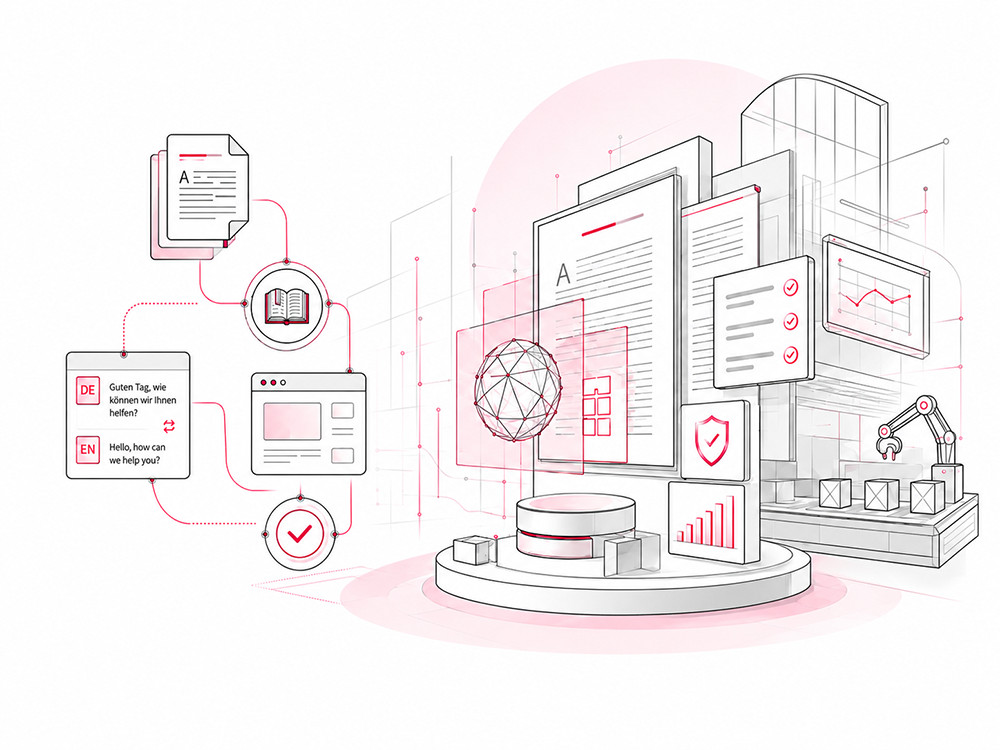
Enterprise content spans documents, software, websites, training, regulatory files, multimedia, and connected product experiences. Stepes manages the complete German content lifecycle.
German Technical Translation
Operating manuals, installation instructions, service documentation, engineering specifications, safety content, product catalogs, technical training, and structured documentation translated with subject-matter precision.
German Technical Translation ServicesGerman Document Translation
Complete translation and production for Word, PowerPoint, Excel, PDF, InDesign, FrameMaker, MadCap Flare, XML, DITA, XLIFF, scanned documents, and graphics-rich files.
Document Translation ServicesGerman Website Localization
Corporate websites, e-commerce, support centers, knowledge bases, product pages, campaigns, metadata, and German SEO content localized for real customer intent and market conventions.
Website Translation ServicesGerman Software and SaaS Localization
User interfaces, mobile apps, SaaS platforms, help systems, release notes, developer content, and continuous product updates localized with variable protection, terminology control, and in-context QA.
Software Localization ServicesGerman Medical and Regulatory Translation
IFUs, labels, clinical materials, medical-device software, regulatory submissions, quality-system documentation, pharmaceutical content, and patient communications supported by specialized workflows.
German Medical Translation ServicesGerman Legal and Compliance Translation
Commercial agreements, corporate records, litigation, privacy, employment, intellectual property, due diligence, compliance policies, and regulatory correspondence translated for their intended legal context.
Legal Translation ServicesGerman eLearning and Training
Technical, compliance, safety, product, and employee training localized across course content, assessments, voice-over, subtitles, on-screen text, and learning-management environments.
eLearning Translation ServicesGerman Multimedia and Desktop Publishing
Voice-over, subtitling, transcription, multimedia engineering, multilingual typesetting, technical graphics, page-flow correction, and final visual QA for production-ready deliverables.
Multilingual Desktop PublishingExpert English-to-German and German-to-English Translation
Stepes helps international organizations enter German-speaking markets and enables German companies to commercialize products and transfer knowledge worldwide.
English-to-German Translation
Natural German for product launches, technical documentation, software, medical content, websites, legal materials, training, marketing, and customer support.
- Native German target-language linguists
- Market-appropriate terminology and tone
- Consistency across connected content
German-to-English Translation
Clear English for engineering documentation, scientific reports, global regulatory use, patents, legal content, supplier materials, corporate communications, and international knowledge transfer.
- Accurate interpretation of long noun phrases
- Subject knowledge for technical ambiguity
- Readable English without loss of meaning
Built for the Linguistic Complexity of German
German structure affects terminology, interface design, document layout, readability, and consistency. Our process addresses these issues before they become downstream quality problems.
Compound Words and Technical Terminology
German can form multiple plausible compound terms for the same concept. A governed termbase helps keep components, warnings, product features, and technical processes consistent across software, manuals, websites, and support content.
Formal and Informal Address
The choice between Sie and du affects pronouns, verbs, tone, and the customer relationship. Stepes applies the approved brand and audience strategy consistently across channels.
Grammar and Sentence Structure
Case, gender, agreement, word order, embedded clauses, and long noun phrases require translators to understand complete technical and business context rather than translate isolated words.
Text Expansion and Interface Constraints
German often needs more characters than English. Concise terminology, screenshot review, layout adjustment, and functional QA help preserve accuracy without breaking buttons, tables, diagrams, labels, or mobile screens.
Dates, Numbers, Units, and Formatting
Decimal separators, dates, times, currencies, measurements, quotation marks, abbreviations, and nonbreaking spaces are adapted to the target market, industry, and customer style guide.
Inclusive and Audience-Appropriate Language
German organizations use different approaches to inclusive language. Stepes follows the customer’s approved policy and helps define a practical convention when one has not yet been established.
German Translation Expertise for High-Value Industries
We combine German language expertise with specialized resources for sectors where terminology, usability, safety, and regulatory accuracy matter most.
Manufacturing and Engineering
Technical documentation, industrial software, service content, work instructions, safety procedures, training, and supplier communications across the product lifecycle.
Medical Devices and Life Sciences
Medical-device, pharmaceutical, clinical, healthcare, and regulatory content supported by terminology, review depth, and quality controls aligned to intended use.
Automotive and Electric Mobility
Vehicle interfaces, diagnostics, owner and service manuals, battery and charging systems, technician training, connected-vehicle content, and supplier documentation.
Software, SaaS, and Technology
Enterprise applications, mobile products, cloud platforms, cybersecurity, knowledge bases, developer content, support, and continuous localization for frequent releases.
Legal, Compliance, and IP
International transactions, contracts, patents, data privacy, employment, litigation, regulatory matters, governance, and internal investigations.
Chemicals, Energy, and Environment
Safety data sheets, product and plant documentation, technical specifications, environmental reporting, renewable-energy systems, regulatory communications, and workforce training.
Control German Terminology Across Products and Content
A centralized German termbase keeps product names, technical terms, abbreviations, interface language, medical terminology, and market variants consistent across every customer touchpoint.
RISK-BASED DELIVERY
The Right German Translation Workflow for Every Content Type
Stepes matches AI, professional linguists, review depth, terminology, and quality controls to the audience, purpose, risk, lifecycle, and business value of each content type.
AI Translation
Rapid understanding and lower-risk internal or high-volume operational content.
AI + Human Review
Knowledge bases, support, product information, and frequently updated digital content.
Professional Translation
Technical, legal, medical, regulatory, marketing, and high-visibility customer content.
Independent Review
Publication-critical or high-risk content requiring editing, proofreading, and expanded QA.
Reuse Approved German Content Across Product Generations
Translation memory identifies previously approved content across updates, manuals, software releases, websites, regulatory submissions, and training programs.
Stepes combines translation memory with terminology and linguistic review so reuse improves speed, consistency, and cost efficiency without introducing outdated or contextually unsuitable translations.
Translation MemoryManage German Translation at Enterprise Scale
Centralize German content across teams, product lines, reviewers, systems, and release schedules with connected workflows and clear program visibility.
Translation Management Portal
Manage requests, files, quotes, status, deliveries, review, user access, and language assets in one place.
Translation Management PortalTranslation API
Connect content systems and applications for automated submission, status tracking, file exchange, and delivery.
Translation APICustomer Review and Approval
Capture reviewer comments, approvals, terminology decisions, and feedback in a controlled workflow.
Reporting and Analytics
Track volume, spend, turnaround, reuse, status, and demand across business units and content programs.
Translation Reporting and AnalyticsApproved updates flow into terminology and translation memory for future reuse.
Quality Controls Built Around Your German Content
Translation quality depends on understanding the content, selecting the right resources, preparing terminology, defining the workflow, checking the output, and incorporating customer feedback.
Content and Risk Assessment
We review the language direction, audience, market, subject matter, intended use, file format, source quality, turnaround, and review requirements.
Linguist and Subject-Matter Matching
Resources are selected for target-language expertise, German locale, industry knowledge, content type, technical complexity, and required tools.
Terminology and Reference Preparation
Glossaries, style guides, translation memory, product references, screenshots, and do-not-translate instructions are prepared before production.
Translation and Human Review
The agreed workflow may use professional translation, AI-assisted translation, independent editing, proofreading, or a combination matched to content risk.
Automated Quality Checks
Terminology, numbers, units, tags, variables, placeholders, punctuation, omissions, inconsistencies, and untranslated text are checked systematically.
Linguistic, Visual, and Functional QA
Final review can include bilingual QA, target proofreading, document-layout review, in-context software testing, link checks, subtitle timing, and multimedia QA.
Feedback Integration
Approved customer feedback is incorporated into terminology, style guides, translation memory, and future project instructions.
Why Enterprises Choose Stepes for German Translation
Stepes combines language expertise, subject-matter resources, flexible workflows, and connected technology to support individual projects and global programs.
Subject-Matter Expertise
Specialized German resources for technical, medical, legal, software, manufacturing, and regulated content.
AI + Human Workflows
Workflows configured for each content type’s audience, risk, quality requirements, and business purpose.
Language Governance
Terminology, translation memory, style guides, automated QA, and reviewer feedback managed across programs.
Scalable Technology
Portals, APIs, continuous localization, in-context review, reporting, and complete content production.
German Translation Pricing
Costs depend on word count, language direction, subject matter, workflow, review level, translation-memory reuse, file format, engineering, desktop publishing, multimedia production, and turnaround.
- Instant quoting for straightforward file-based projects
- Customized scoping for technical, medical, legal, software, and enterprise programs
- Translation-memory analysis for approved content reuse
- Complete production estimates for layout, testing, or multimedia
Turnaround and Delivery Planning
Delivery schedules reflect content volume, complexity, file preparation, terminology readiness, review requirements, formatting, engineering, and review and approval timing.
For large programs, priority content can be delivered first while the remaining files continue through translation, review, and production.
German Translation FAQs
Practical answers about German locales, workflows, terminology, formats, pricing, review, and delivery.
Ask Our German TeamDo you provide both English-to-German and German-to-English translation?
Yes. English-to-German translation supports companies entering German-speaking markets, while German-to-English translation helps German organizations commercialize products, transfer technical knowledge, and communicate internationally.
What is the difference between German for Germany and Austrian German?
Both use standard written German, but differences can occur in terminology, institutional language, legal usage, healthcare, consumer products, and customer communications. Stepes can determine whether targeted adaptation or a separate Austrian version is appropriate.
What is Swiss Standard German?
Swiss Standard German is the written form commonly used in professional, governmental, educational, technical, and commercial communication in German-speaking Switzerland. It has distinct spelling and terminology conventions, including ss instead of ß.
Do German translations require more space than English?
They often can. German compound words and grammatical structures may increase character length, affecting software interfaces, tables, diagrams, slides, packaging, and subtitles. We address this through concise translation, layout adjustment, and in-context review.
How do you keep German terminology consistent?
Stepes can create a centralized termbase with approved terms, definitions, context, abbreviations, prohibited alternatives, and market variants. Terminology is available during translation and can be checked automatically across connected content.
Can Stepes translate German technical manuals and structured content?
Yes. We translate operating instructions, service documentation, engineering specifications, safety materials, product catalogs, training, and structured formats including DITA XML, FrameMaker, MadCap Flare, HTML, Markdown, and XLIFF.
Do you provide German medical and regulatory translation?
Yes. Stepes translates medical-device, pharmaceutical, clinical, healthcare, and regulatory content. Workflows can include specialist translation, independent review, terminology management, formatting, and quality assurance.
Can AI be used for German translation?
Yes, when appropriate for the content and intended use. AI can support lower-risk, internal, high-volume, or time-sensitive content. Technical, legal, medical, regulatory, safety, or high-visibility content may require professional translation or human review.
Can Stepes localize software and SaaS products into German?
Yes. We translate interfaces, mobile applications, SaaS platforms, notifications, help content, release notes, developer documentation, and app-store content, with options for terminology management, screenshot review, in-context QA, and continuous localization.
How much does German translation cost?
Pricing depends on word count, language direction, subject matter, workflow, translation-memory reuse, file format, formatting, engineering, review level, and turnaround. Straightforward projects can use an instant quote; complex programs receive customized scoping.
How long does German translation take?
Turnaround depends on volume, complexity, formatting, terminology readiness, review requirements, and delivery sequence. Stepes supports standard, expedited, phased, rolling, and continuous-delivery models.
Can our German employees review translations?
Yes. Customer reviewers can participate in controlled review and approval workflows. Approved feedback can then update terminology, style guides, and translation memory for future projects.
Translate Your German Content With Confidence
Combine native German linguists, industry expertise, AI-enabled workflows, terminology governance, and enterprise quality controls for everything from individual documents to global content programs.